


Industrial Security
Safeguarding Critical Industrial Infrastructure Through 24/7 Security Coverage
See how our ASIAL Gold Member officers run 24/7 critical infrastructure security across Melbourne's industrial sites, with patrols and logged access.
The Challenge
Why a Multi-Industry Industrial Portfolio Needs One Consistent Standard
Operators running industrial security in Melbourne rarely fit one template. A manufacturing plant, a logistics yard, and a utilities site each carry different layouts, different traffic volumes, and different hazards, but they share the same underlying question: who is on-site right now, and can that be proven later?
Property crime has kept climbing across the state. In the 12 months to 31 December 2025, property and deception offences in Victoria rose 3.9 percent to 367,349, driven largely by theft offences, which climbed by more than 12,600 to reach 238,535 for the year. For sites holding plant, stock, or infrastructure assets, that trend makes documented access control less of an extra and more of a baseline expectation.
Workplace safety adds a second layer. Manufacturing and transport, postal and warehousing are consistently among the industries accounting for the largest share of Australia's workplace fatalities and serious injury claims, which is why hazard identification sits alongside security patrols on every site we cover, not as a separate add-on.
Our Solution
Our Approach: Building the Same Standard Into Every Site
We don't run a different playbook for every client. We run the same core routine and adjust the frequency and staffing to match each site's traffic and risk profile.
Gatehouse Control and Daytime Vehicle Logging
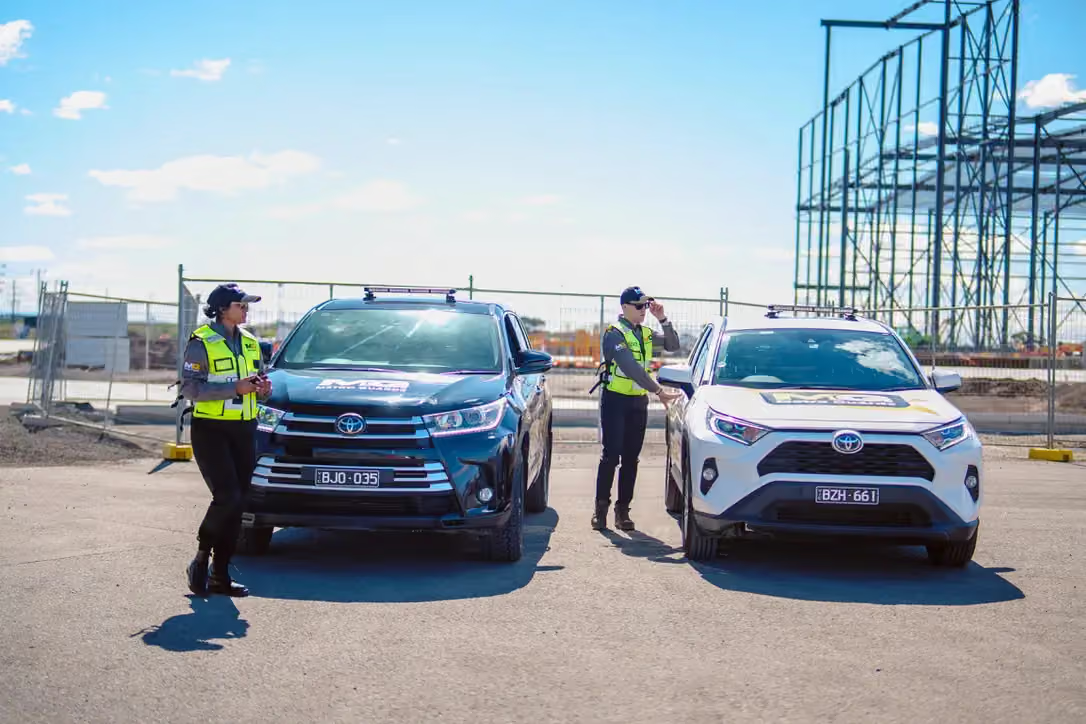
A static officer covers the main gate during business hours on every site. Every vehicle entering or leaving is logged, driver name, company, vehicle registration, and time, so the client has a full record of who moved through the gate on any given day, not a rough headcount.
Visitor Recording and Escorted Movement
Every visitor is recorded at the gate before entry: name, company, purpose of visit, and arrival time. Where a visitor needs to reach a specific area of the site, an officer confirms their route and checks they're following it rather than wandering into zones they weren't cleared for. That closes the gap between "signed in" and "actually where they said they'd be."
Randomised Patrols, Scaled to Traffic
Patrol frequency is set by how busy the site is, not a flat schedule applied everywhere:
| Time of Day | Patrol Frequency | Why |
|---|---|---|
| Night | 3 patrols per shift | Lower foot traffic, higher risk window for unauthorised entry |
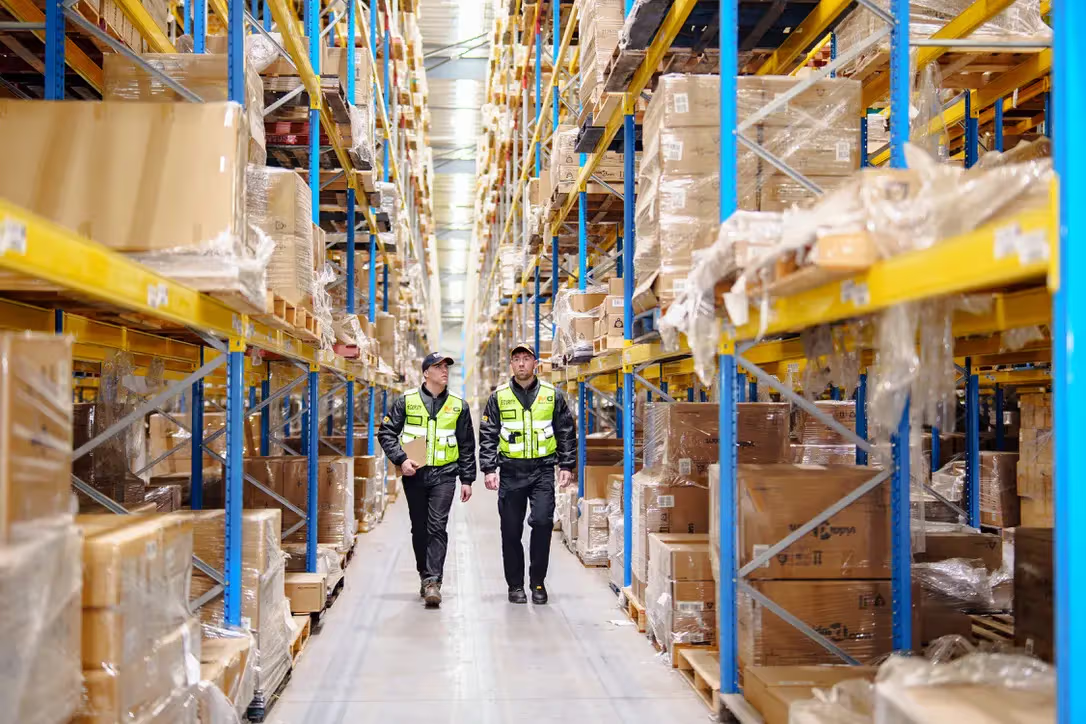
| Day | 1 to 2 patrols per shift | Higher vehicle and staff movement means static coverage plus fewer, targeted patrol sweeps is more effective than constant patrolling |
Timing within each patrol window is randomised, so the gap between passes can't be predicted from outside the fence line.
NFC Checkpoint Verification
Officers scan NFC checkpoints at fixed points around the site during each patrol. That gives the client a timestamped record confirming a patrol physically reached every point on the route, rather than a verbal assurance that a circuit was completed.
Client-Directed Entry Blocks
If a client tells us no visitors are to be admitted on a given day or during a specific window, that instruction is applied at the gate immediately. Anyone arriving is held outside the perimeter, and entry is only granted once the client has been contacted and given explicit permission, never assumed or waved through on the officer's own judgement.
Out-of-Hours Visitor Form
Anyone arriving outside business hours is logged on a dedicated out-of-hours visitor form before the gate opens for them: name, company, vehicle details, purpose, and arrival time. That form is kept as part of the site's ongoing record, giving the client a documented trail of every after-hours arrival rather than relying on an officer's memory of who came through.
Incident Reports and Hazard Reports
Two separate reporting streams run alongside each other. Incident reports cover security events: attempted entry, suspicious activity, or anything requiring escalation, and go to the client the same shift. Hazard reports cover physical site risks officers notice on patrol, such as damaged fencing, blocked emergency exits, or exposed wiring, and are raised separately so safety issues don't get buried inside a security log.
Shift Activity Reports
At the end of each shift, a shift activity report is compiled and emailed to the client. It brings together vehicle and visitor logs, patrol check-ins, and any incident or hazard reports raised during that shift, giving the client one document rather than several disconnected records to chase down.
The Outcome
Before vs. After
| Area | Before | After |
|---|---|---|
| Vehicle movement | No consistent log of entries and exits | Every vehicle logged with driver, company, and time |
| Visitor tracking | Sign-in only, no route verification | Recorded on entry and checked against their stated route |
| Patrol coverage | Fixed, predictable timing | Randomised, NFC-verified patrols scaled to day/night traffic |
| After-hours arrivals | Inconsistent screening | Logged on a dedicated out-of-hours visitor form before entry |
| Hazards | Noted informally, if at all | Logged as a separate hazard report the same shift |
| Reporting | Ad hoc, verbal updates | Structured shift activity reports emailed after every shift |
Results
- Consistent 24/7 coverage applied across multiple industrial and critical infrastructure sites under one reporting standard
- Every vehicle and visitor movement logged, with escorted verification for visitors on active sites
- NFC-verified patrols: 3 per night shift, 1 to 2 per day shift, scaled to each site's traffic pattern
- Entry blocked and held for client sign-off whenever a no-visitor instruction is in place
- Same-shift incident and hazard reporting, rolled into a single shift activity report emailed to the client
Running this framework across several industries at once means the client's site management team can compare records across locations using the same format, which matters when different site managers, insurers, or a regulator are all asking for evidence rather than a summary.
Why This Reflects How We Work
We deliver critical infrastructure security in Melbourne as an ISO 9001 and CM3 certified business, an ASIAL Gold Member, and licensed by the Licensing & Regulation Division (LRD), Victoria Police. That certification sits alongside 17 years operating across Melbourne's industrial and commercial sectors.
Officers working across manufacturing, logistics, and utilities sites complete a full site induction before their first shift, covering escalation contacts, restricted zones, and emergency procedures, aligned to each site's own OHS requirements and to Safe Work Australia guidance.
Depending on the asset and sector, some of these sites also fall under the Security of Critical Infrastructure Act 2018 (Cth), which is a further reason we keep every log, patrol record, and report structured the same way across the portfolio.
Services Delivered
Industrial Site SecurityGatehouse & Access ControlMobile PatrolsNFC Patrol VerificationIncident & Hazard Reporting
FAQs
Frequently Asked Questions
Accreditation & Partnerships









Protect Your Business
Rapid Security Deployment Across Melbourne
Do not wait for something to go wrong before you act. Metro Guards can have licensed officers on your site at short notice. Our team is available 24/7 and ready to respond.
Strengthen Your Business Security
Access our free security audit checklist and company evaluation survey.
- Melbourne Business Security Audit Checklist
- Commercial Security Company Evaluation Survey