


Industrial Security
Data Centre Security Melbourne | Physical Security for Critical Infrastructure
Metro Guards delivered end-to-end data centre security services for a critical infrastructure facility in Melbourne's western suburbs. Through strict access control, monitoring centre integration, mobile patrols, alarm response, and comprehensive reporting, the facility achieved stronger security, improved compliance, and complete visibility across every shift.
The Challenge
Running a data centre is a high-stakes business, especially when Critical Infrastructure Security depends on constant uptime, controlled access, and fast incident response. The clients who rely on that infrastructure, whether enterprise businesses, government agencies, or technology firms, expect zero downtime.
For a facility like this, Security for Critical Infrastructure had to focus on fast response and reliable documentation. They cannot accept risk of breaches or security surprises. When something goes wrong physically, the consequences travel fast and far.
The facility Metro Guards was engaged to protect sits in Melbourne's western suburbs and operates around the clock. Before our involvement, the security operation had a few problems that the facility's management team had been trying to resolve for some time.
Visitor and contractor access was inconsistently managed with no reliable system for verifying who was on-site at any given time.
Shift transitions and after-hours maintenance visits created real exposure due to gaps in access verification.
Alarm response had no clear ownership. Overnight alerts followed an undefined path from trigger to action.
Mobile patrol coverage of the external perimeter was limited. Parts of the site were unchecked during some night-time windows.
Incident reporting was reactive. Documentation happened eventually, but without structure or timelines.
No pattern recognition capability. The management did not have a clear idea of site activity to spot the problems.
Metro Guards was brought in to fix that.
Our Solution
The first step was building practical Data Centre Security Solutions around the facility’s real risks. We conducted a thorough risk assessment of the facility before placing guards on the site. Our crew moved through the space, observed shift handovers, identified CCTV blind spots, checked lighting coverage, and spoke to facility staff about how the site operated day to day.
What we found shaped everything. This gave the facility a stronger approach to Security Risk Management for Data Centres, with controls based on actual weak points rather than assumptions.
The highest-risk window was overnight. After-hours contractor access had no consistent protocol. External yard and loading areas had limited visibility during those hours. We built the security plan around those findings, addressing the immediate gaps first. Our professionals layered more structured controls as the engagement progressed.
Our Solutions for Security
Gatehouse Security Services and Access Control
The gatehouse is where security either holds or fails. We built a clear entry protocol that applied to everyone without exception: regular staff, visiting engineers, delivery drivers, hardware vendors, and third-party contractors.
Every person entering the site presents identification, states their purpose, and gets verified. Our team checks them in the authorised access register before any gate or barrier opens. This sounds straightforward, but the discipline required to apply it consistently across every shift is where a lot of security operations fall short.
This Access Control Security process made sure every person entering the site was verified before any gate, barrier, or restricted area was opened.
Tailgating is one of the most common and most dangerous physical access vulnerabilities in any high-security facility. People follow authorised staff through doors and barriers before they close. Our gatehouse guards are trained specifically to prevent this.
Vehicle access follows the same logic. Every vehicle entering the secure yard gets logged. Drivers need independent verification before loading bay access is granted. The same Data Centre Access Control standards apply to staff, contractors, visitors, delivery drivers, and service vehicles.
Visitor and Contractor Management
This was one of the most significant changes we made, and it had an immediate effect. Third-party contractors arriving for maintenance work, cable management, or equipment servicing now go through a formalised process.
This gave the site a formal Data Centre Visitor Management process, making it clear who was on-site, why they were there, and where they were allowed to go.
All contractor visits are pre-registered with the facility's operations team before the day of the visit. Our guards check them against that register, verify their identity, and issue visitor credentials. The team escorts them to the area they are authorised to access. Contractors working in sensitive areas are not left unaccompanied. We also note down their departure times.
For the first time, the facility's operations manager had a real picture of who was on-site at any given hour. That visibility alone resolved several of the compliance concerns the facility had been dealing with.
Static Security Guards
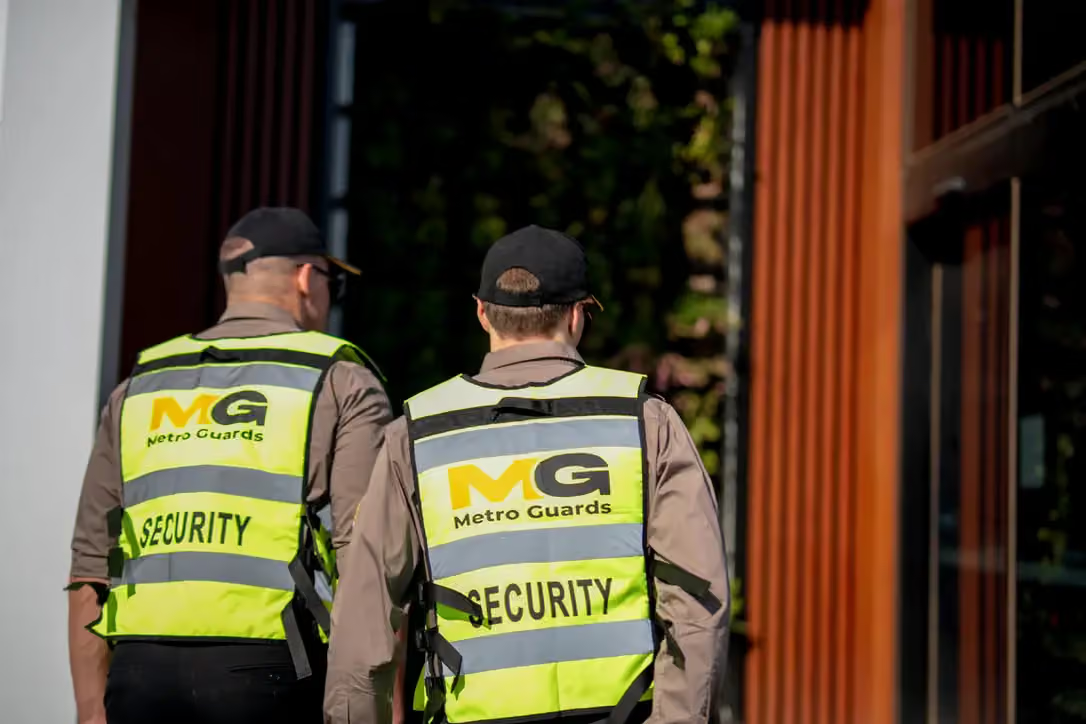
We positioned data centre security guards at key fixed posts throughout the facility. These guards completed a thorough site induction covering emergency procedures, escalation contacts, equipment locations, and the identities of authorised personnel.
Shift handovers follow a structured briefing process. Nothing gets passed on verbally and left to memory. Upcoming contractor visits, outstanding follow-ups from the previous shift, monitoring centre updates, and any access permission changes all get documented.
Mobile Patrol Operations
Mobile Patrol Security supported the static guards by covering the external perimeter, vehicle yards, loading areas, and equipment storage zones. Mobile patrols cover everything that falls between those positions, including the external perimeter, vehicle yards, loading areas, and equipment storage zones. They complete regular checks but do not need a permanently stationed guard.
Metro Guards runs mobile patrols on both scheduled and randomised routes overnight. The randomisation is deliberate. A predictable patrol pattern is a vulnerability. Someone scoping the site can identify the gap between one pass and the next and use it. A patrol that does not follow a fixed schedule is much harder to plan around.
Every patrol is verified digitally. Guards check in at fixed points using NFC scanning. The timestamp and location data go straight into our reporting system. The facility manager has access to that data and can pull up a complete record of every patrol from any date.
These Data Centre Mobile Patrols made it harder for anyone to predict guard movements or identify unprotected windows.
Monitoring Centre Integration
One of the more involved parts of this engagement was linking the facility's existing alarm infrastructure to Metro Guards' monitoring centre operations. This created stronger Monitoring Centre Security by connecting alarms and patrols through one clear response process.
The facility had CCTV coverage and alarm systems already in place. We gave it a reliable human response when those systems triggered outside business hours. Alarms would go off overnight, and the path from alert to action was unclear.
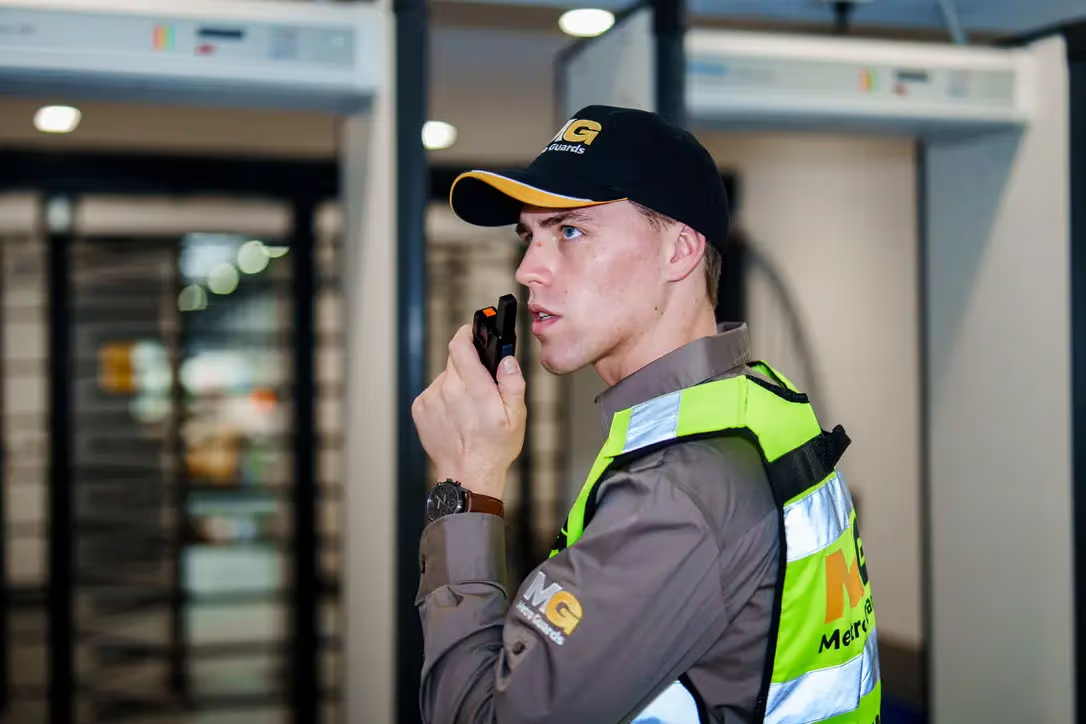
We coordinated the connection between the on-site alarm systems and our 24/7 monitoring centre. Now when an alarm activates, the monitoring centre receives the alert. It directs the appropriate response.
This gave the facility reliable Alarm Response Services for after-hours alerts, perimeter events, and alarm activations that needed immediate action.
The on-site guard gets an immediate call. For external perimeter events, a mobile patrol vehicle can be redirected within minutes. Security Operations Centre Support meant every alert had a clear path from detection to action.
Daily Operations and Alarm Response
Every shift starts with a structured handover, which supports consistent Data Centre Alarm Response when alerts occur during or after business hours. Incoming guards are briefed on pre-registered visitors, outstanding items from the previous shift, and any access or procedure changes. Nothing gets passed on verbally and left to memory.
When an alarm triggers, the monitoring centre checks available CCTV, classifies the event, and directs the response. The on-site guard moves to the affected zone and reports back. Every activation gets documented, including false alarms, because patterns in alarm data often reveal problems.
Incident Reporting and Escalation
In critical infrastructure security, the incident report matters as much as the response itself. A well-documented incident gives facility management, compliance auditors, and insurers a clear account of what happened, when it happened, and what was done about it. A missing or vague report creates the kind of ambiguity that becomes expensive later.
Every incident receives a formal report that covers the date, time, and location, the guard on duty, and the supervisor notified. It follows a chronological account of events, the actions taken, the outcome, and any follow-up required.
The site manager gets a call in case of any serious incidents. This can involve a confirmed breach attempt, physical confrontation, equipment interference, or a situation requiring emergency services.
Supervision, Quality Assurance and Client Communication
A dedicated Metro Guards supervisor conducts unannounced visits across all shift patterns, including nights and weekends. He checks guard positioning, occurrence logs, and emergency procedure knowledge.
The facility manager receives a weekly summary and a monthly review meeting. If something needs adjusting, it gets adjusted. The security plan is treated as a working document.
FAQs
Frequently Asked Questions

Accreditation & Partnerships










Protect Your Business
Rapid Security Deployment Across Melbourne
Do not wait for something to go wrong before you act. Metro Guards can have licensed officers on your site at short notice. Our team is available 24/7 and ready to respond.
Strengthen Your Business Security
Access our free security audit checklist and company evaluation survey.
- Melbourne Business Security Audit Checklist
- Commercial Security Company Evaluation Survey