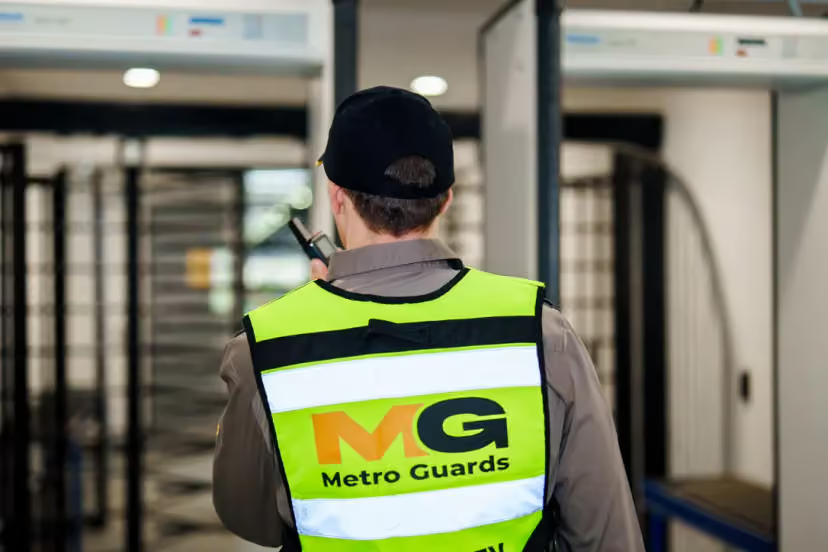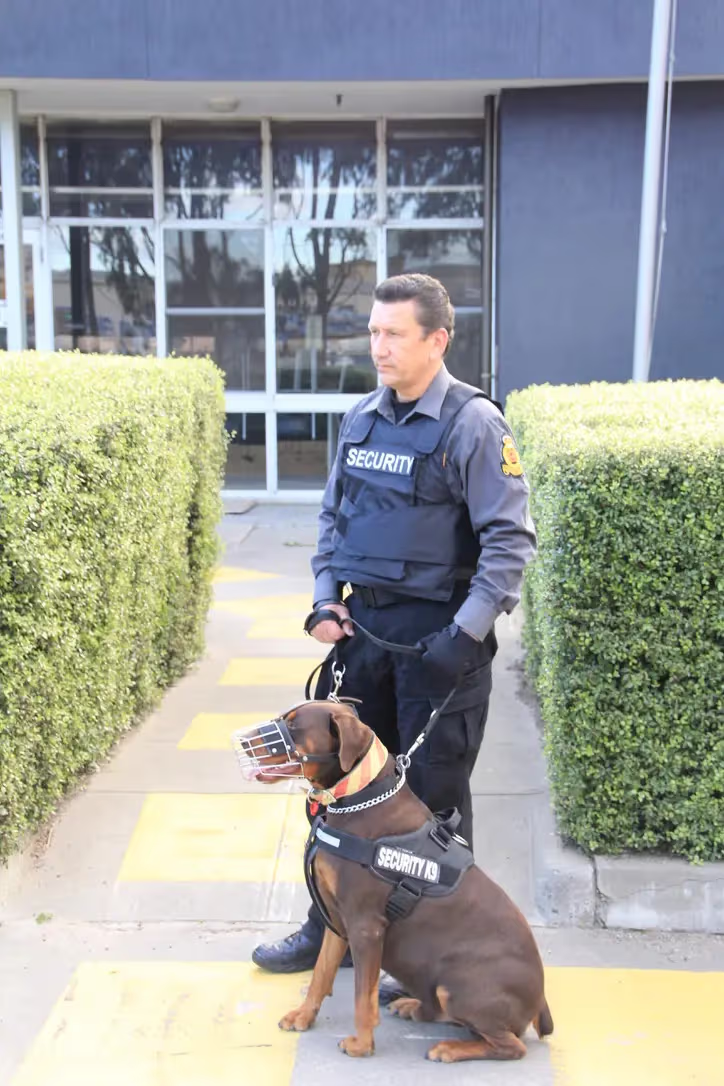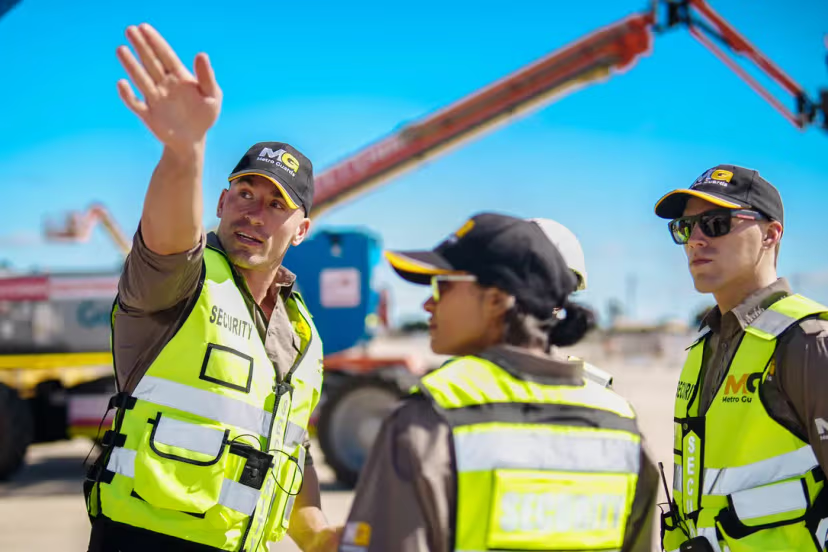



Hospital security services cover three jobs at once: controlling who enters a facility, responding fast when an incident breaks out, and keeping patients and staff safe around the clock.
As an ISO-certified, CM3-prequalified, ASIAL Gold Member provider, we've delivered patient and staff safety protocols for healthcare clients through 17 years of protective security work across Melbourne.
Most hospitals underestimate how much ground this covers until an incident forces the issue. Getting security guards in Melbourne who understand clinical environments matters more than most administrators realise, because a guard who does not know ward etiquette can do more harm than good in a place built around calm.
Below, we break down what hospital access control procedures should look like, how emergency response actually works on the ground, and where most facilities leave gaps.
What Hospital Security Really Covers
A hospital security contract is rarely just "a guard at the door." It usually spans:
- Perimeter and entry control: managing who comes through main entrances, loading docks and staff-only doors
- Ward and department patrols: regular checks through emergency, maternity, mental health and paediatric units
- Emergency response: first-on-scene support for Code Grey (unarmed threat) and Code Black (armed threat) events
- Visitor and contractor management: sign-in systems, ID checks and escort duties for after-hours trades
- Asset and drug security: monitoring pharmacy stores, equipment rooms and loading areas
- Incident documentation: written reports for every callout, supporting hospital risk and compliance teams
Each of these needs a slightly different skill set, which is why rostering matters as much as headcount. See our full hospital security guards service page for staffing options and coverage models.
Getting Access Control Right in a Hospital Setting
Access control in a hospital is harder than in a typical commercial building because the site cannot simply lock its doors. Emergency departments need to stay open 24/7, families need reasonable access to wards, and deliveries keep coming.
Layered access zones
The facilities that manage this well split the site into zones: public areas (reception, cafes, waiting rooms), controlled areas (wards, theatres), and restricted areas (pharmacy, records, mental health units). Each zone gets a different check: open access, sign-in and badge, or escorted entry only.
Visitor sign-in and identification
A simple sign-in desk staffed by a trained officer is one of the most effective forms of unauthorised visitor prevention, catching issues before they start. Officers cross-check ID against visiting hours, flag repeat visitors who do not match a patient record, and escalate anything that looks off to nursing staff or the duty manager.
After-hours and loading dock control
In our experience, loading docks and side entrances left propped open for deliveries are a common weak point outside business hours. Static officers with clear sign-off procedures close this gap.
Emergency Department Security Measures
Emergency departments carry the highest risk of any part of a hospital. Frustration, pain, intoxication, and mental health crises all concentrate in one waiting room, often for hours at a time.
A well-run response plan for a busy ED includes:
| Element | Purpose |
|---|---|
| De-escalation-trained officers | Reduce the chance a verbal dispute becomes physical |
| Behavioural assessment area | Separate space for agitated patients, away from general waiting |
| Standardised Code Grey response | Consistent, drilled procedure for unarmed threats |
| Direct line to Victoria Police | Fast escalation path for Code Black (armed threat) events |
| Post-incident debrief and reporting | Feeds back into staffing and layout decisions |
The scale of this problem is well documented. Safe Work Australia identifies healthcare and social assistance as one of the industries with the highest rates of occupational violence in the country.
In Victoria specifically, one regional health service reported a 23 per cent rise in code grey alerts for violent, aggressive and threatening behaviour (Barwon Health, 2018) over a two-year period, with most incidents concentrated in the emergency department.
Healthcare Facility Incident Response: What Good Looks Like
When something does go wrong, the gap between a contained incident and a serious one usually comes down to speed and clarity. A solid response plan sets out, in advance:
- Who calls the code and how (radio, duress alarm, phone tree)
- Which officer responds to which zone
- When clinical staff step back and security or police take over
- How the incident gets logged for the hospital's risk register
- Who runs the debrief and what changes as a result
In our experience, facilities that rehearse this plan regularly tend to respond faster and with more composure than those that only look at it after an incident happens.
Hospital Violence Prevention Measures Beyond the Security Team
Security officers are one layer of the picture, not the whole answer. The Victorian Government has backed this with a $5.8 million four-year commitment (Better Safe Care Victoria) to improving the safety and security of the state's public hospitals and reducing violence against hospital staff.
The Australian Medical Association has separately pushed for stronger measures, noting that the World Health Organization estimates as many as 38 per cent of medical professionals will experience physical violence at some point in their careers.
Practical layers that work alongside trained officers:
- Duress alarms for clinical staff, not just reception
- CCTV coverage of entrances, corridors and the emergency waiting room
- Behavioural flags on patient records for known risk history
- Staff training in de-escalation, refreshed annually
- Clear signage on acceptable behaviour and consequences
If your facility is reviewing its violence prevention measures, get a quote from our team for a site walkthrough and a tailored security plan.
Healthcare Facility Safety Management as an Ongoing Process
This kind of planning is not a one-off setup. Patient volumes shift, new wings open, and staff turns over. We review access points, patrol routes, and reporting procedures with hospital and clinic clients on a regular cycle rather than leaving a security plan to gather dust after the first walkthrough.
This sits alongside our wider healthcare and aged care security services, which also cover aged care facility security for residential and multi-site operators.
For facilities that need coverage beyond static officers, mobile patrol security and alarm response services fill the gaps between shifts, particularly for satellite clinics without a permanent on-site presence.
Get a Quote for Hospital Security in Melbourne
If your hospital, clinic or aged care facility needs a security review, our officers are licensed by the Licensing & Regulation Division (LRD), Victoria Police, and trained specifically for clinical environments. Request a quote or call our team to walk through your site and current risks.
Frequently Asked Questions
What does hospital security cover?
Hospital security typically covers entry and access control, ward patrols, emergency response to Code Grey and Code Black events, visitor management, and incident reporting. The exact mix depends on the size and layout of the facility.
How much does hospital security cost in Melbourne?
Cost depends on hours of coverage, number of officers, and whether the site needs static guards, mobile patrols, or a combination. Emergency departments and 24/7 sites generally need a higher officer count than a small day clinic.
Are hospital security guards licensed in Victoria?
Yes. Security officers working in Victorian hospitals must hold a private security individual licence issued through the Licensing & Regulation Division (LRD), Victoria Police, and complete the relevant training for the duties they perform.
What is a Code Grey response in a hospital?
A Code Grey is the standardised term used across Victorian hospitals for an unarmed threat: a patient or visitor showing aggressive, violent or threatening behaviour. It triggers a coordinated response from clinical and security staff.
Can security officers restrict visitor access in a hospital?
Yes, within the hospital's own visitor policy. Officers enforce sign-in procedures, verify identification, and can deny or escort entry when someone does not meet the facility's visiting criteria.
How do hospitals handle security after hours?
After-hours coverage usually relies on static officers at key entrances, mobile patrols checking the wider site, and duress alarm response, since foot traffic drops but access points like loading docks and side doors remain a risk.