

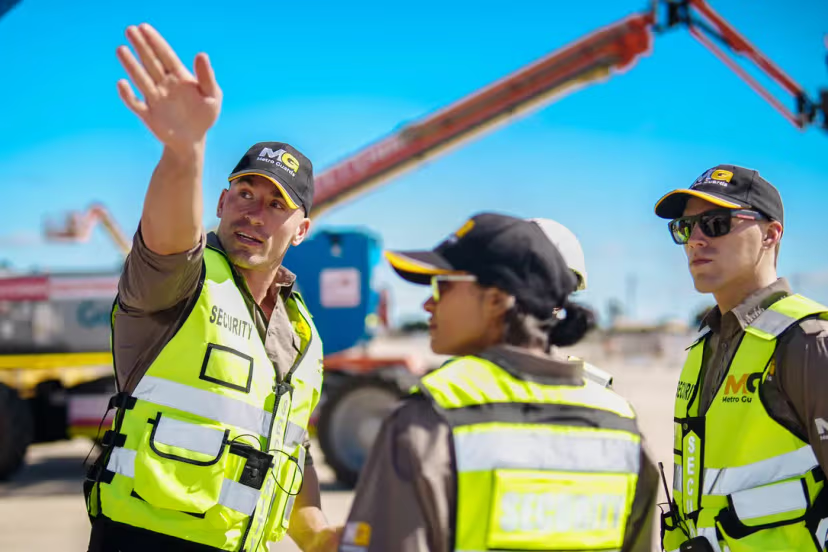
Choosing construction security services in Melbourne comes down to three checks: current Victorian licensing, real experience working with builders and principal contractors on live sites, and a clear plan for access control, patrols and incident reporting. This guide covers what to verify, what a proper service should include, the red flags that separate a professional operator from a guard-for-hire arrangement, and what typically drives cost.
Victoria's construction sector is large, and its sites are exposed. Once materials, plant and partially built structures are left overnight, a site becomes a target. Builders, developers, site managers and subcontractors all have a stake in how security patrols are scheduled, how a provider verifies its officers, and how quickly an incident gets escalated back to the person running the project.
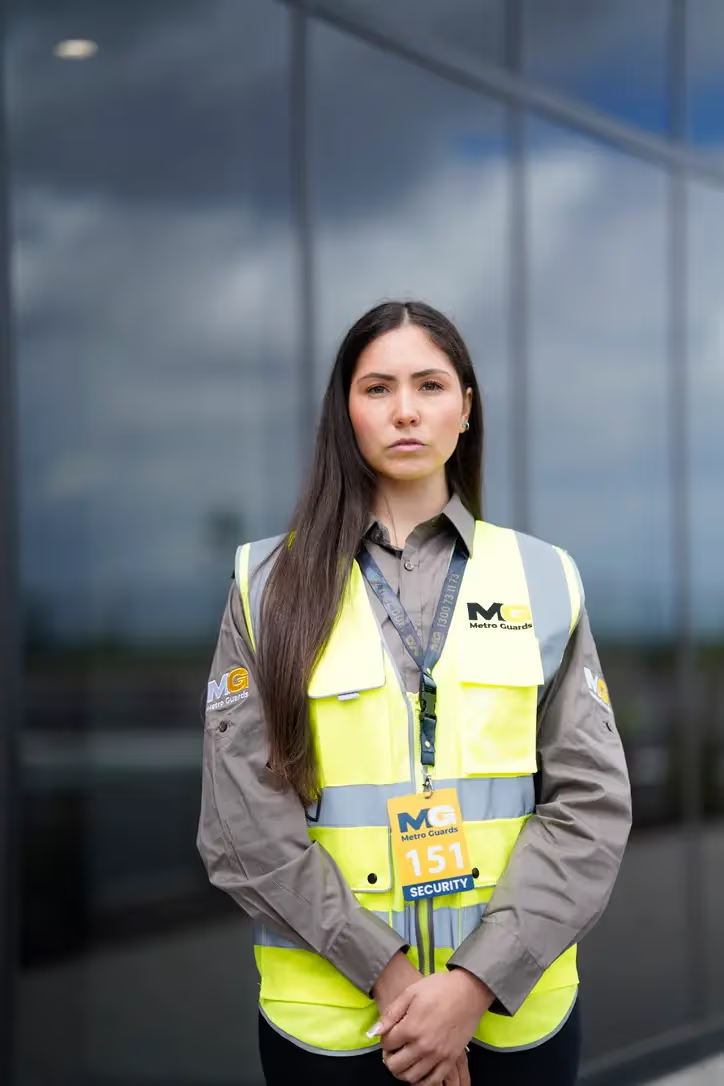
Metro Guards, for example, holds ISO and CM3 certification and is an ASIAL Gold Member in addition to its Victoria Police licensing, which gives a useful reference point for what "properly credentialed" looks like in this industry.
Why Construction Sites Need Specialist Security
A retail store locks its doors at 6 pm. A construction site does not have that option. Site compounds hold plant, tools, copper, timber and partially finished work that changes in value every week as a build progresses, and most of it sits behind nothing more than temporary fencing overnight and on weekends.
The financial exposure is real. Tool theft in Victoria reached more than $40.8 million in the year to 30 June 2025, a 7.5% rise on the year before, with over 36,000 individual power and hand tools reported stolen across the state. Construction also remains one of the highest-risk industries for workplace safety, accounting for a fifth of Australia's workplace fatalities in 2024 according to Safe Work Australia, which is one reason site security and site safety procedures are usually managed together rather than as separate functions.
What to Look for in a Melbourne Security Company
Every provider will tell you they are reliable. Fewer will show the paperwork. Before engaging anyone, ask for evidence rather than a verbal assurance on the following:
- Current status on Victoria's public security licence register, for the business and for every individual officer rostered to your site
- A labour hire licence, if the provider supplies personnel to your site rather than using directly employed staff (more on this below)
- Public liability insurance at a level that matches the value of plant and materials on site
- Documented building site access control procedures, not just a guard's word that the gate was checked
- Experience with builders or principal contractors in your specific sector, whether that's residential, commercial or civil
- A clear reporting process: patrol logs, incident reports and escalation contacts, not a verbal update days later
- References you can actually call, ideally from a site manager rather than a head office contact
Security Licensing and Compliance in Victoria
Licensing is where most of the risk hides, because it is easy to check and often skipped. Under the Private Security Act 2004 (Vic), both the security business and every individual guard working on your site need a current licence issued by the Licensing & Regulation Division (LRD), Victoria Police. You can confirm any licence or registration on the Victoria Police public register before a contract is signed, not after.
There is a second, less well-known licence that many builders never ask about. Security businesses that supply guards to work on someone else's site are, in most cases, considered labour hire providers under the Labour Hire Licensing Act 2018 (Vic), and must hold a separate licence from the Labour Hire Authority.
Engaging or using an unlicensed labour hire provider carries significant penalties in Victoria, and any subcontracted guards supplied through a chain of providers need to be licensed as well. A provider that can produce both licences on request, rather than just the business's LRD certificate, is generally further along on compliance than one that cannot.
What Site Security Should Include
A generic guard roster rarely fits how a live build actually runs. Decent construction security services in Melbourne are structured around the stage of the project, not sold as a flat rate per shift.
| Function | What it covers |
|---|---|
| Access control | Contractor sign-in, ID checks and site induction records for workers, deliveries and visitors |
| Gatehouse operations | Controlled entry and exit through a single monitored point rather than an open compound |
| Mobile patrols | Scheduled perimeter checks after hours, on weekends and public holidays |
| Static coverage | On-site officers during high-value stages such as plant delivery or fit-out |
| Key and delivery management | Logged handling of site keys, and verification of deliveries against a site access list |
| Monitoring | CCTV checks and alarm response linked back to a control point |
| Incident escalation | Documented handover notes and reporting for site management and insurers |
Static Guards vs Mobile Patrols
The right mix depends on the stage of the build and what is exposed at any given time.
Static guarding suits sites holding high-value plant, a large compound with multiple access points, or a fit-out stage where fixtures and fittings are moved in progressively. A guard on site provides continuous, 24/7 construction site security in Melbourne, controlling the gatehouse and responding immediately to a perimeter breach rather than discovering it on the next patrol.
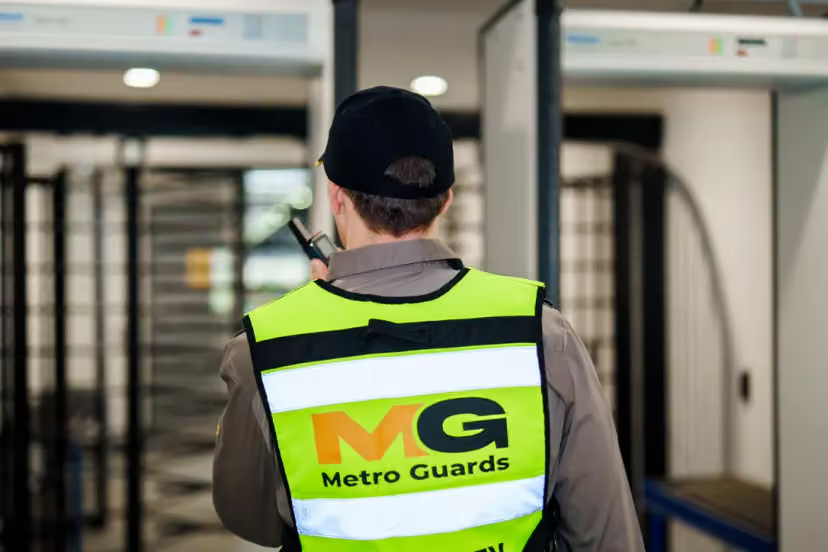
Mobile patrols suit smaller sites, early groundworks with less to steal, or projects where the main risk is after-hours access rather than continuous activity. Well-run construction site security patrols in Melbourne are logged and, on better services, verified through GPS or NFC checkpoints so the client can see exactly when and where a check took place.
Hybrid coverage, combining static hours around deliveries or high-risk periods with patrols overnight, is common on mid-sized Melbourne projects where round-the-clock static coverage isn't justified by the risk, but unattended overnight checks alone leave a gap.
Construction Site Access Control
Access control is where most preventable incidents actually happen, more often than dramatic break-ins. A workable system usually includes a site induction record for every worker before their first day, a contractor sign-in log at the gatehouse, ID checks matched against an approved list, and a delivery process that confirms goods against a purchase order before a truck is waved through.
Visitor management, including anyone outside the regular trade list, should follow the same process rather than a wave-through exception. Where a site has multiple entry points, each one needs the same standard applied, since a single unmonitored gap undermines the rest.
How Professional Security Helps Prevent Theft
Construction site theft prevention works best as a layered approach rather than a single measure. Visible patrols and lit compounds deter opportunistic theft, since most incidents target sites that look unattended.
Asset marking and GPS tracking on high-value plant make stolen equipment harder to resell and easier to recover, which matters given that fewer than one in five stolen items are typically recovered once they leave a site.
Secure, monitored compounds for copper, timber and smaller high-resale items reduce the specific categories of theft that make up the bulk of reported losses. None of these measures work in isolation; a security provider should be coordinating them with your site's fencing, lighting and storage setup rather than treating patrols as a stand-alone service.
Metro Guards, for instance, ties asset marking and GPS tracking into the same patrol and reporting schedule rather than running it as a separate add-on.
Red Flags When Choosing a Security Provider
A few warning signs are worth checking for before you sign anything:
- Unable or unwilling to produce current LRD licence details on request
- Rates significantly below the rest of the market with no clear explanation
- No construction-specific references, only retail or event security examples
- No documented incident reporting, or reports that arrive verbally days later
- Heavy reliance on subcontracted guards without confirming they are individually licensed
- No defined escalation process for after-hours incidents
- No patrol verification method, so you have no way to confirm a scheduled check actually happened
- Vague answers about labour hire licensing when the provider is clearly supplying personnel
Five Questions to Ask Before Signing a Contract
- Can you provide your current LRD licence and, if applicable, your labour hire licence in writing? A properly licensed provider will send both without hesitation.
- Have you worked on sites like mine? A CBD high-rise, a Dandenong warehouse build and a Fishermans Bend residential project carry different risks and need different coverage.
- What happens after hours? Ask exactly how alarm response and overnight patrols are staffed, not just what the sales material says.
- How do I see what happened on site overnight? You should receive a digital report with timestamps, not a phone call several days later.
- Who do I call if something goes wrong at 2 am? A single accountable contact matters more than a general call centre line.
How Much Does Construction Security Cost in Melbourne?
Pricing is usually structured per shift for static coverage or per visit for scheduled patrols, and varies with a handful of factors: site size and number of access points, hours of coverage required, whether officers are directly employed or subcontracted, and how much reporting and technology (GPS verification, digital logs) is built into the service.
Sites needing 24/7 static coverage during a high-value stage will cost more than a project relying on scheduled overnight patrols during early groundworks. Because of this variation, a written, itemised quote against your specific site plan is a better comparison tool than a single hourly rate quoted over the phone.
Get a Quote for Your Site
If you're comparing options for an upcoming or active build, Metro Guards can put together a coverage plan built around your site's stages, access points and budget. For a broader look at choosing a security provider outside a construction context, see our guide to choosing the best security company in Melbourne.
Frequently Asked Questions
How much does construction security cost in Melbourne?
Cost depends on site size, hours of coverage and whether you need static officers, mobile patrols or a hybrid of both. Providers typically price per shift or per patrol visit rather than a single flat rate.
What licence does a security company need to operate in Victoria?
Security businesses and every individual officer they employ need a current licence issued under the Private Security Act 2004 (Vic) by the Licensing & Regulation Division, Victoria Police. Providers that supply guards to work on someone else's site generally also need a labour hire licence from the Labour Hire Authority. Both can be checked on the relevant public registers before you engage a provider.
Is mobile patrol or a static guard better for a construction site?
It depends on the site. Early-stage sites with lower asset value often suit scheduled mobile patrols, while sites holding high-value plant, fit-out materials or copper are usually better served by static, on-site coverage or a hybrid of both.
How is subcontractor access managed on a construction site?
Reliable providers issue a site induction record and ID checks for every worker, keep a contractor sign-in log at the gatehouse, and cross-reference deliveries against a site access list, rather than relying on a shared gate code.
Can a security company help reduce insurance premiums on a building site?
Documented access control, patrol logs and incident reporting can support a site's overall risk management profile, and some insurers factor this into their assessment. Whether it affects your premium depends on your specific insurer and policy, so it's worth raising directly with your broker rather than assuming a discount.
Do construction sites need security on weekends and public holidays?
It's generally recommended. Sites can be more exposed when workers and site managers are away for extended periods, which is often when scheduled patrols or static coverage matter most, though the right level of cover still depends on what's on site at the time.