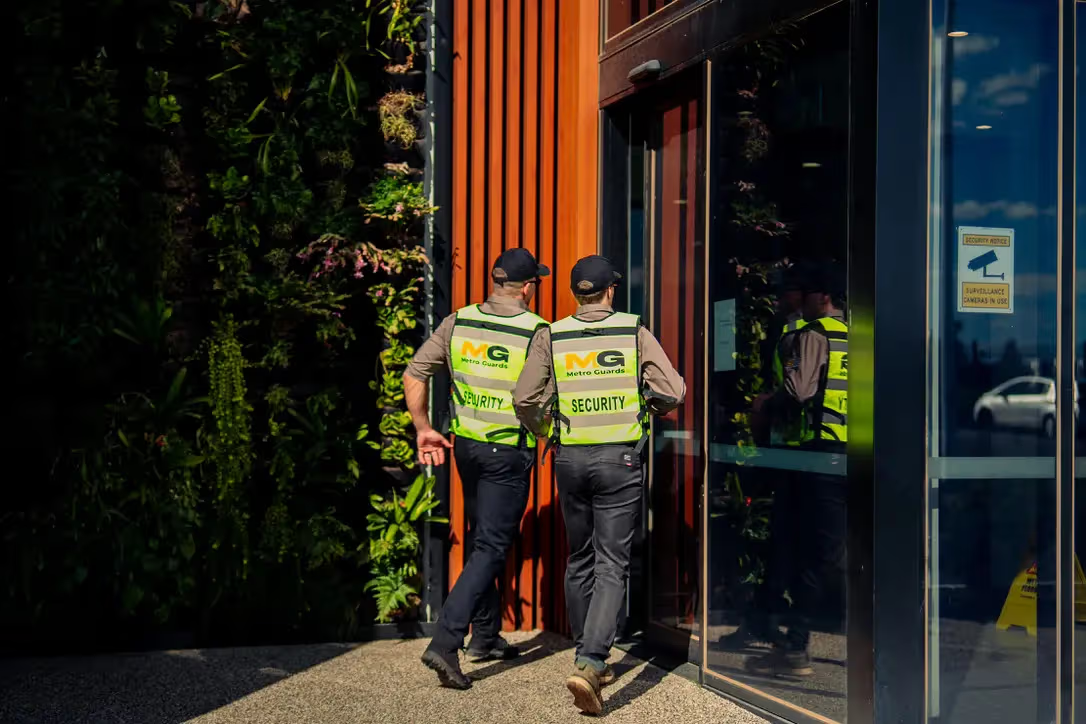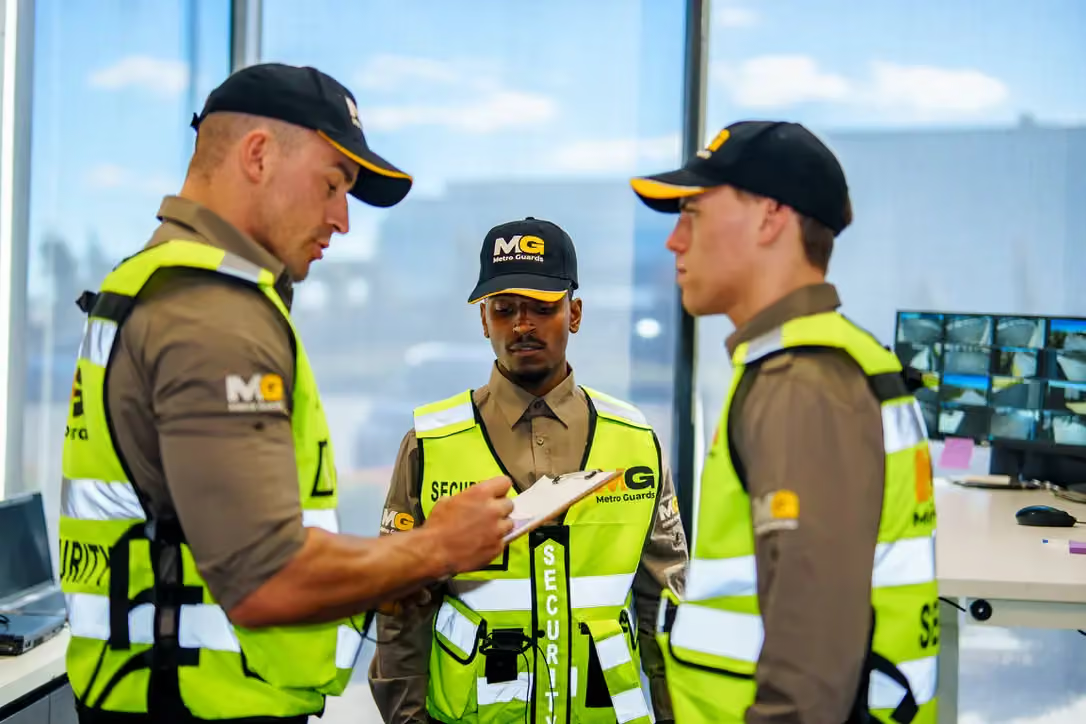


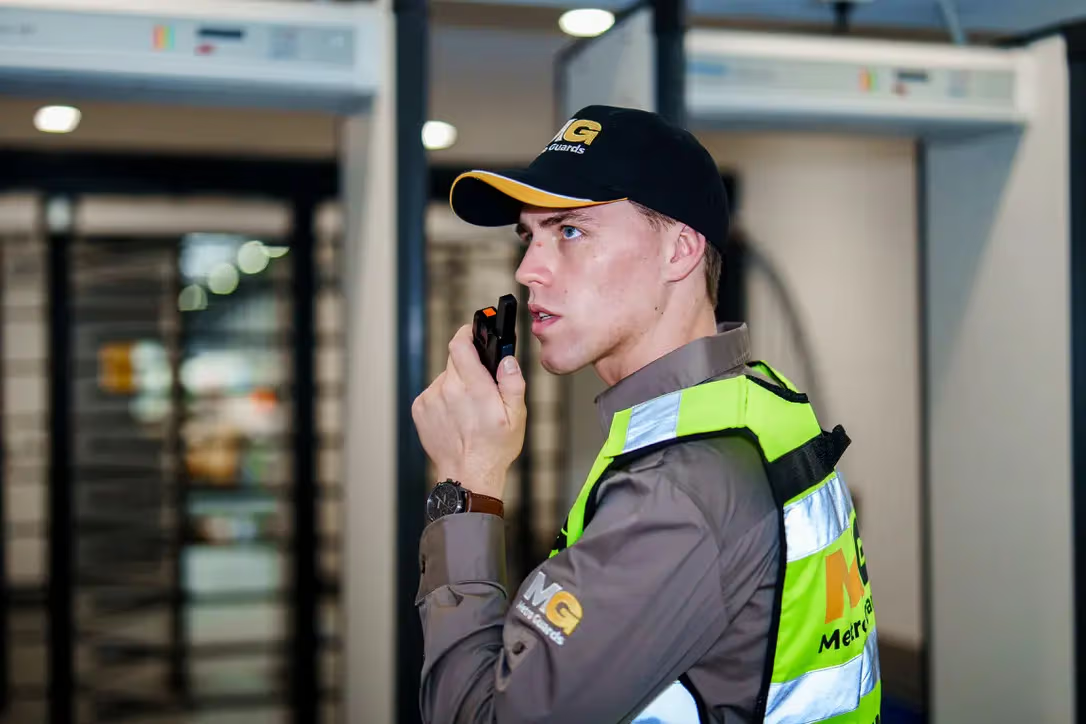
Gatehouse security services help shopping centres control access through service gates, loading docks and designated vehicle entries. Officers verify bookings, record arrivals and refer unauthorised visitors to centre management. These checks support shopping centre theft prevention while helping delivery vehicles move through the site safely.
Metro Guards provides security services across Melbourne. A useful gatehouse arrangement starts with the centre's layout, delivery schedule and access rules. Customer entrances, staff doors and service gates need different procedures, with clear instructions for each post.
Where Gatehouse Officers Work Across a Shopping Centre
A gatehouse is usually a fixed post at a controlled entrance. The wider security team may also cover contractor entries and car parks, but those duties need their own staffing arrangements.
| Location | What officers do | Risks addressed |
|---|---|---|
| Vehicle entry gates | Check drivers, registrations and visit details | Unauthorised vehicle access |
| Loading docks | Verify deliveries and control access to available bays | Unverified stock movements and vehicle conflicts |
| Staff and contractor entries | Check authorisation and record entry and exit | Unauthorised access to service areas |
| Car parks | Patrol agreed areas and report hazards or suspicious activity | Vehicle crime, antisocial behaviour and blocked routes |
| After-hours gates | Check approval before allowing access | Trespass and break-ins |
Centres may combine static security guards at busy access points with car park patrols. Mobile patrols can provide additional checks after hours. Where continuous gate coverage is required, relief arrangements should allow officers to take breaks without leaving the entrance unattended.
Entry Control for Vehicles, Contractors and Visitors
Shopping mall access control should distinguish public entrances from restricted service areas. At a service gate, an approved booking or work order gives the officer a clear basis for checking access.
A typical gate check follows five steps.
- Confirm the delivery booking, contractor work order or tenant request.
- Match the driver and company to the approved visit.
- Record the vehicle registration, arrival time and destination.
- Issue the required pass and direct the driver to the authorised bay.
- Record departure and report changes from the approved visit.
Written post orders should identify who can approve an unplanned arrival and who is available after hours. They should also explain what happens when booking details do not match or a contractor arrives outside the approved access window.
Centre management and the provider should agree these instructions for each gate. A Melbourne CBD site with limited delivery space will need different arrangements from a suburban centre with several loading bays.
Loading Dock Security and Pedestrian Separation
Loading dock security brings delivery verification, contractor sign-in and vehicle access control together. Safe Work Australia's shopping centre guidance recommends measures such as limiting vehicle access to loading docks and scheduling their use. These measures help reduce interactions between pedestrians and vehicles.
Officers can support the agreed arrangements through practical checks.
- Check arrivals against the dock booking schedule.
- Direct waiting vehicles to a designated holding area when a bay is occupied.
- Record arrival and departure times and any delivery discrepancies.
- Report blocked walkways, damaged barriers and near misses promptly.
Holding areas must suit the site. A queue outside the gate should not obstruct a footpath, public road or emergency route. The traffic management plan should explain where vehicles wait and how drivers receive further instructions.
In Victoria, the Occupational Health and Safety Act 2004 (Vic) sets workplace safety duties. WorkSafe Victoria's guidance for employers explains the responsibilities employers hold. Engaging security does not remove the duties held by employers or those managing the workplace. Management should develop and review traffic arrangements with appropriate advice and consultation, then brief officers on their assigned tasks.
Car Park Patrols and Customer Safety
Shopping centre parking area security needs coverage beyond the entry barrier. Stairwells, pedestrian routes, pay stations and quieter parking levels can all need attention. Patrol duties should reflect the centre's layout, trading hours and incident history.
Officers may be assigned to the following duties.
- Observe suspicious activity near vehicles and report specific behaviour.
- Report broken lighting, damaged barriers and blocked exits.
- Check emergency access routes and escalate obstructions.
- Help customers with directions and contact suitable assistance when needed.
- Provide staff escorts after closing where included in the service.
Customer safety in shopping centres benefits from clear routes and prompt reporting as well as a visible officer. Patrol records should show the areas checked, the conditions observed and the action taken.
Patrol times can vary within the agreed coverage so checks do not become entirely predictable. However, the centre should still be able to confirm that every assigned area received attention.
How Perimeter Controls Support Theft Prevention
Shoplifting prevention measures involve retailers, floor security and the centre's wider security arrangements. Gatehouse officers contribute by checking service access, identifying unapproved arrivals and recording unusual vehicle or stock movements.
For example, a driver collecting goods through a service entrance should have the required authorisation. Where details are missing or inconsistent, the officer should contact the nominated tenant or manager before allowing access under the centre's procedures.
Shopping centre security guards can pass relevant incident details to gate officers through an agreed communication channel. Retail security and loss prevention teams have separate responsibilities inside stores. Clear handovers help each team understand what to observe and whom to notify without leaving its own post unattended.
Gate logs may also help establish a timeline when an incident is investigated. Records should describe what the officer observed and the action taken, rather than assumptions about someone's intentions.
Incident Response and Crowd Management at the Gate
Shopping centre incident response should give officers a clear order of priorities while allowing them to respond safely to the circumstances.
- Assess the danger and move people away where safe to do so.
- Call Triple Zero (000) for an emergency, including a crime in progress or an immediate threat to safety.
- Notify the centre duty manager and request further support.
- Keep emergency access routes clear and direct responders to the location.
- Record observations, actions and relevant times in the incident log.
Non-urgent incidents should follow the appropriate reporting channel and the centre's escalation procedures. Officers should know who is responsible for notifying police, preserving relevant records and updating centre management.
Shopping centre crowd management during sale events also needs a plan for vehicle queues, pedestrian crossings and car parks approaching capacity. Officers should know who can authorise temporary entry restrictions and how customers will be directed to alternative parking.
Any work requiring separate traffic control training or authorisation should be assigned to appropriately qualified personnel. Gate duties and traffic control responsibilities should be clear before peak trading begins.
What to Check Before You Hire a Security Guard
Before you hire a security guard, check both the provider's business authorisation and each officer's licence for the activities required.
The Licensing and Regulation Division (LRD) of Victoria Police regulates private security under the Private Security Act 2004 (Vic). Its current private security guidance treats private security activities as licensed activities, with transitional arrangements for some existing registrations. Use the public register to check current status rather than relying only on a card's printed expiry date.
Ask prospective providers to explain how the service will work at your centre.
- Written post orders for each gate and dock.
- A named supervisor and an agreed supervision schedule.
- Relief coverage for breaks and unexpected absences.
- Sample logs and reporting timeframes.
- CCTV integration procedures and access permissions where relevant.
- Briefing arrangements when site procedures change.
A site walk should form part of the discussion. It gives management and the provider an opportunity to identify restricted entrances, delivery conflicts, communication gaps and areas that need separate patrol coverage.
Metro Guards holds ASIAL Gold Member status and has 17 years of experience, as stated on its website. Membership is a separate credential from a Victorian security licence, so current authorisation should still be checked before engagement.
Request a Quote for Your Centre
For gatehouse security services in Melbourne, send Metro Guards your site layout, trading hours and loading schedule. Include the gates requiring coverage, after-hours access needs and any recurring delivery or car park issues.
We can discuss the posts, patrol duties and hours required for your centre. Call 1300 73 11 73 or request a quote.
Frequently Asked Questions
Can one officer cover the gatehouse and patrol the car park?
Only when the agreed duties allow the gate to be left unattended or relief is available. If continuous entry checks are required, allocate separate patrol coverage or arrange relief before the officer leaves.
What happens if the barrier or access system fails?
The post orders should include a manual fallback, an escalation contact and a method for recording movements. Test the arrangement during mobilisation so officers know how to maintain safe access while repairs are arranged.
Can existing delivery booking software be used?
Discuss this during scoping. Confirm whether officers will have suitable access, which booking details they can view, and how amendments will reach the gate. A shared system is useful only when the information stays current.
How should a centre compare gatehouse security quotes?
Compare the same coverage hours and duties. Check whether each quote includes supervision, break relief, reporting, public holiday rates and any equipment charges. A lower hourly rate may cover a different service.
What should happen during a shift handover?
The outgoing officer should brief the replacement on vehicles still on site, expected arrivals, outstanding incidents and equipment faults. Keys, passes and relevant records should be checked before responsibility changes.