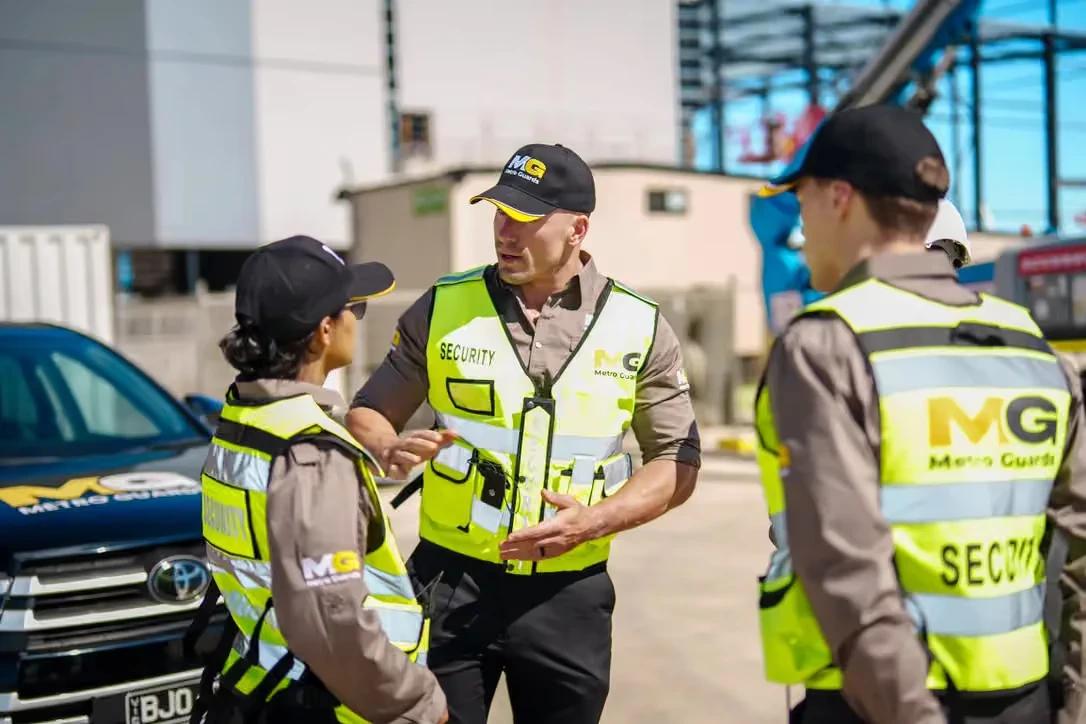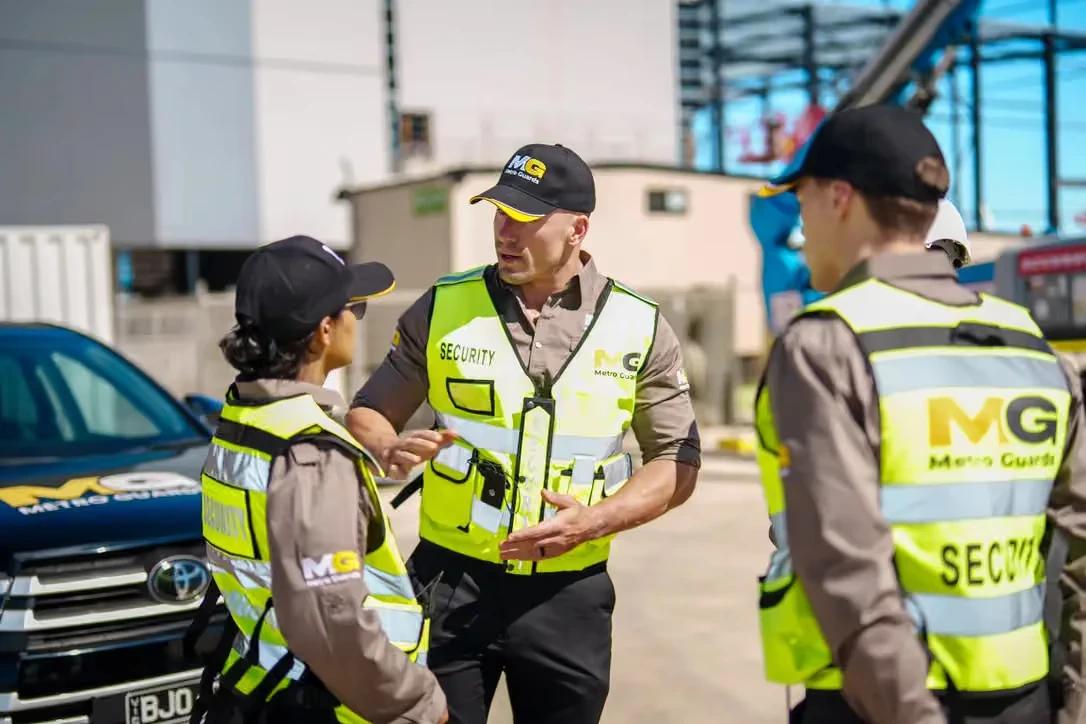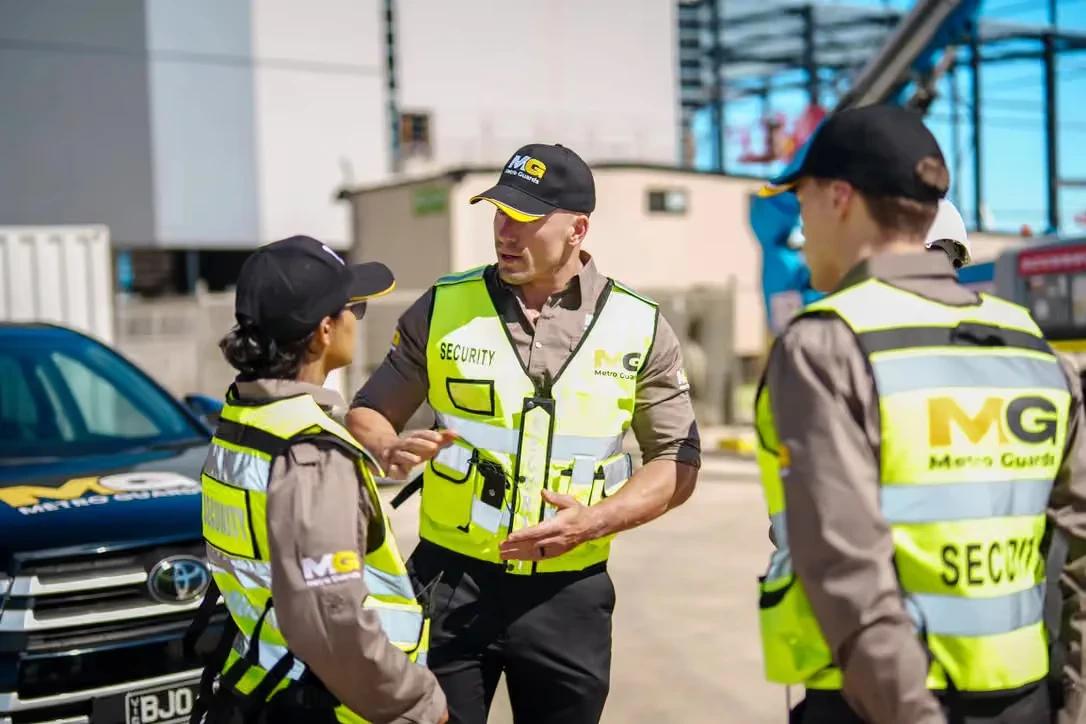


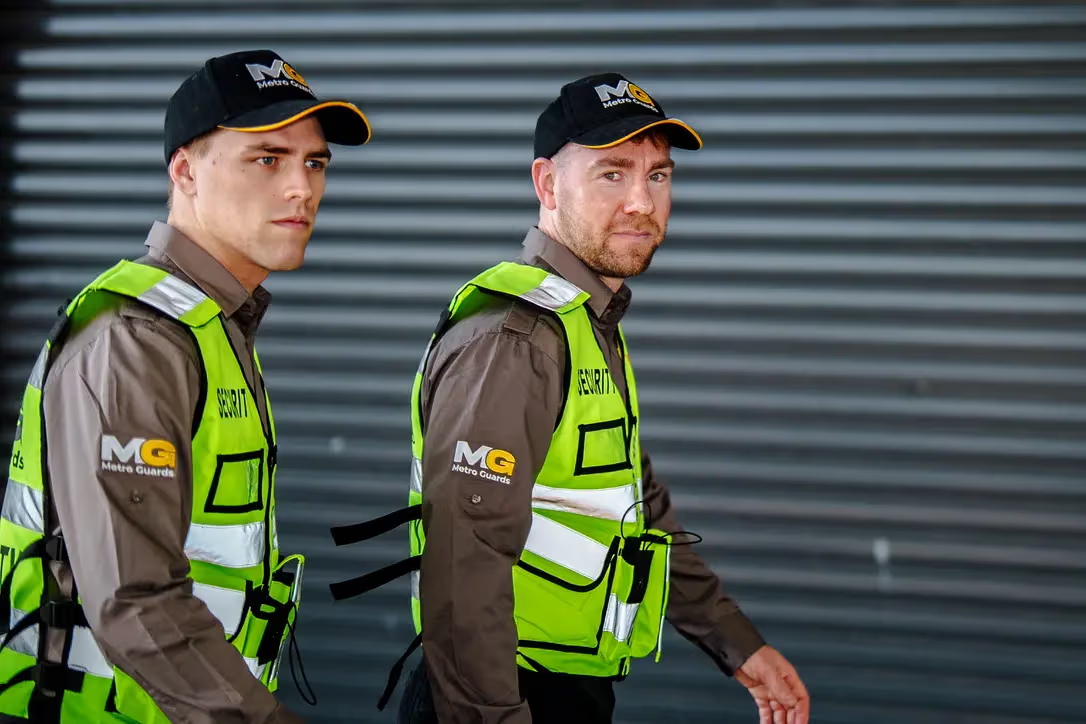
Undercover security guards in Victoria work under the same licensing, surveillance and arrest laws as uniformed officers, and they hold no police powers. A security company in Melbourne that supplies covert officers must hold the correct licences and respect strict limits on recording, searching and detaining people.
This guide explains what covert security guards can lawfully do under the Private Security Act 2004 (Vic), the Surveillance Devices Act 1999 (Vic) and the Crimes Act 1958 (Vic). It also shows where covert surveillance security and discreet security services cross the line, and what a business should verify before it engages a security company in Melbourne.
Undercover, Covert and Plain Clothes: Three Terms, One Legal Framework
The Private Security Act 2004 (Vic) licenses activities, not uniforms. The Victoria Police definitions of each activity do not separate uniformed work from plain clothes work, so a guard who watches a shop floor in everyday clothing holds the same licence activity as a guard in uniform.
This article uses the terms as follows:
- Plain clothes security guards in Melbourne work without a uniform on a client's premises.
- Covert security guards observe without disclosing their security role to the public.
- Undercover security guards adopt a cover role, such as a shopper or staff member, for a defined operation.
These labels describe how an officer presents. They do not change the legal test: does the officer hold the right licence, did the people recorded consent where the law requires it, and did the officer stay within citizen-level powers.
A site can use uniform and covert officers side by side, and the legal rules below apply to both.
Licensing: What Every Covert Officer Must Hold Before the First Shift
Since 19 June 2025, all private security activities in Victoria have been licensed activities under the Private Security and County Court Amendment Act 2024. Former registration holders had to apply for a licence by 19 June 2026, although Victoria Police advises that some registrations remain valid until their transition applications are finalised.
A business that supplies officers needs a private security business licence. Each officer needs an individual operator licence covering the activity performed. Two activities matter most for covert work:
| Licence activity | Victoria Police definition (summarised) |
|---|---|
| Security guard | A person employed or retained to protect, watch or guard property, including by patrolling or CCTV monitoring |
| Investigator | A person employed or retained, on behalf of another person, to obtain and provide information about the personal character, actions or location of any person |
The boundary depends on the task, not the job title. An officer who watches property fits the first definition. An officer who gathers information about a named person's conduct for a client moves towards the second.
A business should check the activities shown against each officer on the Victoria Police public register, or ask the Licensing & Regulation Division (LRD), before approving a covert assignment.
Renewal rules changed on 5 October 2026: renewing operators must complete first aid training, and security guards, crowd controllers and bodyguards must also complete approved refresher training. The same checks apply to any licensed security guards a client engages, uniformed or not.
Surveillance Law: Where the Hard Lines Sit
The Surveillance Devices Act 1999 (Vic) regulates listening, optical and tracking devices. It applies to covert surveillance security work exactly as it applies to everyone else.
Recording conversations
Section 6 prohibits knowingly installing, using or maintaining a listening device to overhear or record a private conversation to which the person is not a party, unless each party consents expressly or by implication. The maximum penalty is two years' imprisonment, 240 penalty units, or both for an individual, and 1,200 penalty units for a body corporate.
The exceptions cover warrants, Commonwealth laws, law enforcement officers and the overt use of body-worn cameras by police, ambulance officers and prescribed persons. None is a general exception for private operators. Because section 6 applies where the person is not a party, it does not reach a conversation in which the recording person takes part.
Hidden cameras, tracking devices and workplaces
Section 7 applies the same test to optical surveillance devices: a person must not knowingly use one to record visually or observe a private activity to which the person is not a party, without the consent of each party, and the maximum penalty matches section 6.
Section 8 separately regulates tracking devices used to determine the geographical location of a person or an object, subject to listed exceptions.
Section 9B bars an employer from using an optical or listening device to observe or record workers in a toilet, washroom, change room or lactation room. Any operation directed at staff must avoid those spaces completely. A business planning any device-based operation should obtain legal advice first.
Arrest, Force and Search: Citizen-Level Powers Only
Covert security guards hold only citizen-level arrest power. Section 458 of the Crimes Act 1958 (Vic) allows any person, police officer or not, to arrest someone without a warrant after finding that person committing an offence. The arresting person must believe on reasonable grounds that arrest is necessary to:
- Ensure the offender appears before a court.
- Preserve public order.
- Prevent the offence continuing or repeating, or a further offence.
- Protect the safety or welfare of the public or the offender.
- Prevent an escape from custody or help given to another person to avoid arrest.
The arresting person must take the offender before a bail justice or the Magistrates' Court of Victoria, or deliver them to a police officer. For summary offences, section 458(3) requires release once the reason for the arrest no longer continues.
Force carries its own limit. Section 462A allows force that is not disproportionate to the objective and that the person believes on reasonable grounds is necessary to prevent an indictable offence or carry out a lawful arrest.
Youth Law Australia notes that a wrongly arrested person may, in some cases, sue for false imprisonment or assault. It also states that a security guard cannot search a person without their permission, and a plain clothes role adds no search power.
Quick Reference: What Covert Officers Can and Cannot Do
| Action | Position in Victoria | Basis |
|---|---|---|
| Record a private conversation between others without consent | Prohibited | Surveillance Devices Act 1999 (Vic), s 6 |
| Record or observe a private activity as a non-party without consent | Prohibited | Surveillance Devices Act 1999 (Vic), s 7 |
| Record workers in a toilet, washroom, change room or lactation room (employer) | Prohibited | Surveillance Devices Act 1999 (Vic), s 9B |
| Search a person or bag | Only with consent | Youth Law Australia |
| Use handcuffs or a baton | Only with CPPSEC3111 or CPPSEC3110 respectively, plus written employer approval | Victoria Police |
| Carry capsicum spray | Prohibited without an exemption order or approval | Victoria Police |
Where Covert Work Meets Retail Loss
Retail theft gives these legal limits practical weight. Victoria Police reported 43,124 theft-from-retail-store offences in the 12 months to June 2026, a 2.7% rise, and said new online reporting systems explain part of the increase. The Crime Statistics Agency separately recorded an 11.7% rise in alleged offender incidents for stealing from a retail store in the year to March 2026, reaching 20,998.
Those figures are statewide, spanning trading environments from the Melbourne CBD and Bourke Street Mall to Highpoint Shopping Centre and suburban strips in Footscray, Dandenong and Sunshine, so a business should set a written scope for each site.
Loss prevention security in Melbourne, including any discreet security services, operates within the same legal limits whether the loss is external theft or internal, and section 9B protects staff in workplace toilets and change rooms. Operators can weigh loss prevention and retail security arrangements against the risks at their own premises.
Seven Checks Before a Covert Operation Starts
- Business licence: confirm the provider's private security business licence on the public register.
- Individual licences: confirm each officer's licence and covered activities.
- Written scope: record the objective, premises, duration and off-limits areas.
- Device rule: prohibit listening, optical and tracking devices unless legal advice has been obtained.
- Arrest protocol: define when an officer may arrest, who calls police and how the handover is documented.
- Equipment approvals: keep written approvals and training records for any handcuffs or batons.
- Evidence handling: set out how notes, CCTV extracts and incident reports are stored and passed to police.
These controls separate a reliable security company in Melbourne from one that sells discretion without accountability. A provider's published compliance and accreditation record gives clients a second reference point beyond the public register.
Request a Confidential Covert Security Assessment
Metro Guards is Licensed by the Licensing & Regulation Division (LRD), Victoria Police, and provides covert security guards for businesses in Melbourne under written scopes that follow the limits above. Call 1300 73 11 73 or request a quote to arrange a confidential assessment of your site.
Frequently Asked Questions
Is it legal to hire undercover security guards in Victoria?
Victoria Police's activity definitions do not separate plain clothes work from uniformed work, so a provider with a private security business licence may supply officers who hold individual operator licences for the activity performed. Those officers must still follow the Surveillance Devices Act 1999 (Vic). This article is general information, not legal advice.
Do covert security guards need a licence in Victoria?
Yes. Victoria Police states that all private security activities have been licensed activities since 19 June 2025. A covert officer needs an individual operator licence for security guard work and, where the task involves gathering information about a person, may need the investigator activity.
Can an undercover security guard arrest someone in Victoria?
Yes, but only as any citizen can under section 458 of the Crimes Act 1958 (Vic). The officer must find the person committing an offence, believe on reasonable grounds that arrest is necessary for a listed reason, and then deliver the person to police or take them before a bail justice or court.
Can security guards search your bag in Victoria?
Only with your permission. Youth Law Australia states that a security guard cannot search a person without consent. If a person declines, a shop may refuse entry or ask them to leave, but a refusal alone does not create a power to search.
Is it illegal to record someone secretly in Victoria?
Section 6 of the Surveillance Devices Act 1999 (Vic) makes it an offence to record a private conversation to which you are not a party without the consent of each party. Section 7 applies a similar rule to optical recording of private activities. Both carry a maximum of two years' imprisonment, 240 penalty units, or both for an individual.