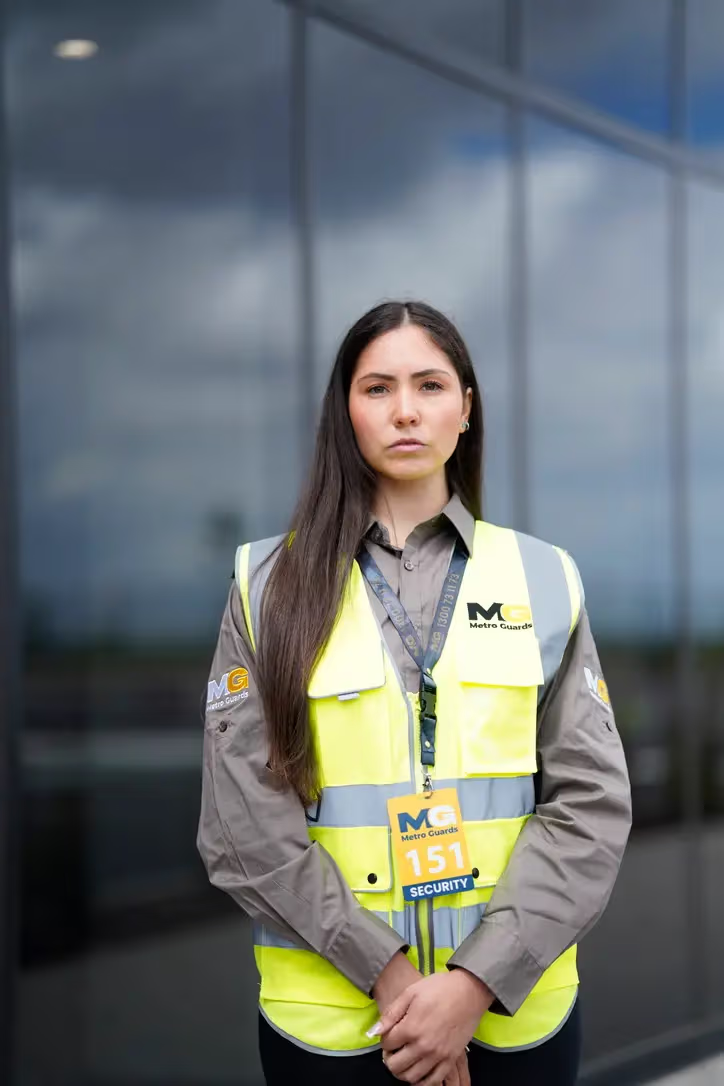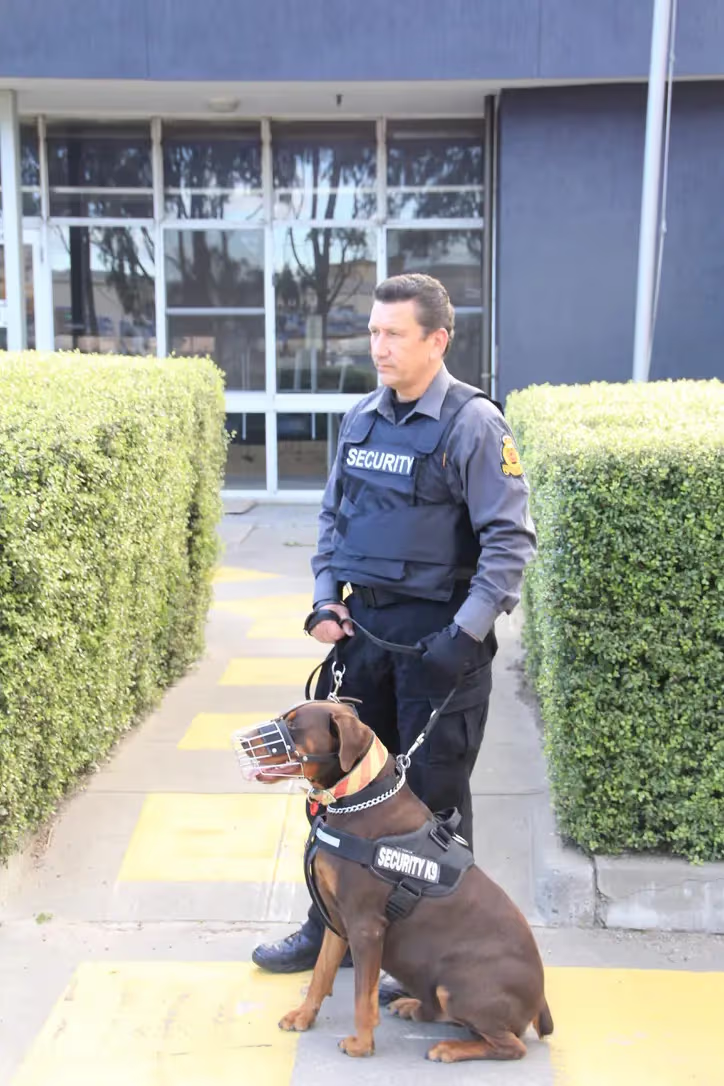


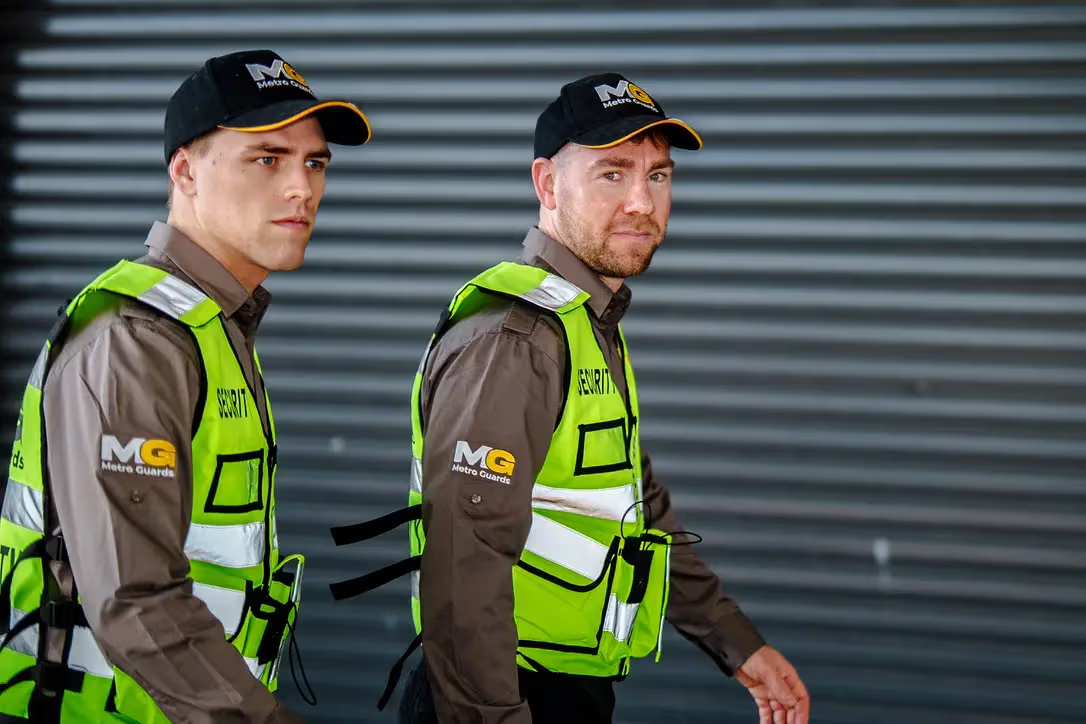
Metro Guards supplies licensed shopping centre security guards to Melbourne retailers, centre managers and property groups. In a busy retail environment, security officers may support theft prevention, access control, customer and staff safety, crowd management and incident response across multiple areas of a shopping centre.
Shopping centres present different security challenges from standalone stores. Large visitor numbers, multiple entry points, car parks, loading areas, food courts and extended trading hours can all create situations that require organised security measures.
For that reason, shopping centre security normally combines trained personnel with CCTV, access procedures, incident reporting and cooperation between retailers, centre management and emergency services.
What Do Shopping Centre Security Guards Cover?
Security requirements vary according to the size, layout, opening hours and risk profile of a shopping centre.
A typical security plan may cover:
| Area | Typical Security Duties |
|---|---|
| Retail floors, malls and walkways | Visible patrols, monitoring high-risk areas and assisting tenants |
| Entrances and exits | Monitoring access, supporting opening and closing procedures and observing unusual activity |
| Car parks and drop-off zones | Vehicle and foot patrols, customer or staff assistance and checking access points |
| Food courts and common areas | Monitoring crowds, responding to disturbances and assisting with lost-person incidents |
| Loading docks and service corridors | Contractor monitoring, delivery checks and restricted-area access control |
| High-value retail areas | Visible security presence, coordination with store employees and incident response |
Some centres use permanent static security guards, while others combine static coverage with mobile security patrols, particularly around external areas and after-hours periods.
Shopping Centre Theft Prevention and Loss Prevention
Retail theft remains an important issue for shopping centres across Victoria.
For the 12 months ending June 2025, Victoria recorded 41,667 theft-from-retail-store offences, an increase of 9,004 offences, or 27.6%, compared with the previous 12-month period, according to Crime Statistics Agency data reported by Victoria Police.
Because this figure relates specifically to the year ending June 2025, it should be treated as a dated snapshot rather than evidence that retail theft will continue increasing indefinitely.
Shopping centre theft prevention usually works best as a layered approach rather than relying on one security measure alone.
Common measures include:
- Visible security patrols through higher-risk retail areas
- CCTV monitoring and communication with centre control rooms
- Appropriate exit-monitoring procedures
- Coordination between security officers and individual retailers
- Accurate incident reporting
- Identification of recurring theft patterns or vulnerable locations
- Review of blind spots, access points and store layouts
Visible officers and consistent loss prevention measures can help reduce opportunistic theft and shrinkage, particularly when they are combined with CCTV, retailer procedures and effective reporting.
Security officers should also understand their legal authority and follow appropriate escalation procedures when suspected theft occurs.
Why CCTV and Security Patrols Work Better Together
CCTV gives centre management visibility across a large site, but cameras cannot physically attend an incident.
Security patrols provide an active presence that can investigate concerns identified through surveillance, assist staff and communicate with management.
An effective system may involve:
- CCTV operators identifying unusual behaviour or activity.
- Security personnel being notified of the location.
- An officer attending and assessing the situation.
- Relevant centre procedures being followed.
- The incident being recorded for future review.
This combination provides both observation and an on-site response without assuming that every suspicious behaviour represents criminal activity.
Customer and Staff Safety in Shopping Centres
Shopping centre security is not limited to theft.
Security teams may also deal with:
- Aggressive or disruptive behaviour
- Customer disputes
- Lost children or vulnerable visitors
- Medical emergencies
- Unsafe crowding
- Hazards in public areas
- After-hours access concerns
- Staff members who need assistance
WorkSafe Victoria recognises aggression or violence as a workplace hazard and identifies retail and customer-service workers among groups who can face increased exposure because they regularly interact with members of the public.
WorkSafe Victoria also identifies measures such as appropriate staffing, incident reporting, de-escalation training, duress systems and onsite security as possible ways of managing these risks.
For shopping centres, this means security should form part of a wider workplace safety system rather than operating independently from centre management and retail employees.
Shopping Centre Crowd Management
Foot traffic can increase significantly during:
- Weekends
- Public holidays
- Christmas trading
- Major sales
- Product launches
- School holidays
- Promotional events
- Entertainment activities
During busy periods, crowd control services may help maintain clear entrances, exits, escalators, walkways and queue areas.
Security personnel can also monitor developing congestion and communicate with centre management before overcrowding begins to affect normal movement.
Good crowd management is primarily preventative. The aim is to identify pressure points early and keep pedestrian movement organised instead of waiting until a situation becomes difficult to manage.
Shopping Mall Access Control
Not every part of a shopping centre should be accessible to the public.
Back-of-house areas may include:
- Loading docks
- Storage spaces
- Plant rooms
- Staff corridors
- Management offices
- Delivery entrances
- Waste areas
- Service corridors
Shopping mall access control may involve checking contractor credentials, maintaining visitor records, monitoring deliveries and restricting access to authorised personnel.
Clear access procedures can also make investigations easier because management has a better record of who entered restricted areas and when.
For larger commercial sites, retail security services may combine access control with patrols, CCTV coordination and incident reporting.
Shopping Centre Parking Area Security
Car parks are often separated from the main retail environment and may have different security risks.
Shopping centre parking area security can include:
- Scheduled foot or vehicle patrols
- Monitoring pedestrian access routes
- Checking entrances and exits
- Observing poorly lit or isolated areas
- Assisting staff travelling to vehicles after dark
- Monitoring taxi and rideshare areas
- Reporting damaged lighting, doors or barriers
- Responding to suspicious activity
CCTV and adequate lighting can complement security patrols, particularly in large multi-level or underground car parks.
Security officers should also document hazards they identify so the responsible maintenance or management team can address them.
Responding to Incidents Inside Shopping Centres
A consistent incident response process helps security personnel react appropriately without creating unnecessary disruption.
A general response framework may involve:
- Assess - determine what has happened and whether anyone is at immediate risk.
- Secure - protect people and, where appropriate, control access to the immediate area.
- Notify - advise centre management or emergency services where required.
- Assist - support customers, staff or emergency personnel.
- Document - create an accurate incident report.
- Review - identify whether procedures or controls should be changed.
Depending on the incident, security personnel may need to coordinate with Victoria Police, Fire Rescue Victoria or Ambulance Victoria rather than attempting to resolve the entire situation themselves.
For alarm-related incidents outside normal trading hours, centres may also use dedicated alarm response security.
The Role of De-Escalation
Security work in a public retail environment requires more than physical presence.
De-escalation may involve:
- Remaining calm and professional
- Maintaining appropriate distance
- Listening before responding
- Giving clear instructions
- Avoiding unnecessary confrontation
- Moving bystanders away where appropriate
- Requesting additional assistance when needed
- Escalating serious incidents to emergency services
The objective is to reduce risk to shoppers, workers and security personnel while following site procedures.
First Aid and Emergency Assistance
Security officers are frequently positioned throughout a shopping centre and may notice an emergency before centre management or emergency responders arrive.
Depending on their training and site requirements, officers may assist with:
- Falls
- Sudden illness
- Minor injuries
- Crowd control around an incident
- Contacting emergency services
- Directing paramedics to the correct location
- Keeping access routes clear
First-aid arrangements should form part of the centre's broader emergency management plan rather than relying solely on security personnel.
Reporting and Documentation
Incident reporting is an important part of shopping centre security.
Reports can help centre management identify:
- Frequently targeted locations
- Repeated incidents
- Recurring access-control problems
- Times when additional coverage may be required
- Safety hazards
- Patterns of aggressive behaviour
- Car park concerns
- Maintenance issues affecting security
Reports should be factual and distinguish between what the officer directly observed and information provided by other people.
Accurate documentation can also help when an incident needs to be reviewed by centre management, insurers or police.
How Should Shopping Centres Plan Security Coverage?
There is no single guard-to-customer ratio that suits every centre.
Before deciding whether to hire security guards, centre managers should consider:
- Centre size and layout
- Daily visitor numbers
- Number of entrances and exits
- Trading hours
- Car park configuration
- Loading docks and restricted areas
- Existing CCTV coverage
- Previous incidents
- High-value retailers
- Peak trading periods
- Events and promotions
- Emergency procedures
A smaller neighbourhood centre may require very different coverage from a major regional shopping complex.
A site security assessment can help determine whether static officers, patrols or a combination of services is appropriate.
Choosing a Shopping Centre Security Provider
When comparing providers, shopping centre managers may want to check:
- Appropriate Victorian security licensing
- Insurance
- Officer training
- Reporting procedures
- Supervisor availability
- Emergency escalation processes
- Replacement procedures for unexpected absences
- Experience in public-facing environments
- Ability to integrate with existing CCTV and access systems
Industry membership can provide another point of reference when assessing providers. The Australian Security Industry Association Limited provides information about professional standards and the Australian security industry.
Credentials should still be verified directly rather than relying only on marketing claims.
How Metro Guards Supports Shopping Centres
Metro Guards provides licensed security personnel for shopping centres and other retail environments across Melbourne.
Depending on the site, coverage can include:
- Security patrols
- Static guards
- Access monitoring
- Retail loss prevention
- Crowd management
- Car park patrols
- Incident reporting
- After-hours security
Metro Guards is also an ASIAL Gold Member and provides services across a range of commercial environments.
Centres with particular risks or unusual operating hours can request a site-specific security arrangement rather than relying on a standard package.
Other Security Services
Shopping centres may require additional services depending on their operating hours, location and risk profile.
- Retail security services: Security coverage for retail stores and shopping environments
- Loss prevention security guards: Support for theft and shrinkage reduction strategies
- Static security guards: Continuous security presence at designated locations
- Mobile patrol security: Scheduled or random site patrols
- Crowd control services: Support for busy venues and high-attendance periods
- Alarm response security guards: Response to activated alarms outside normal operating hours
- Event security guards: Security support for launches, promotions and centre events
- Retail and hospitality security: Security solutions for public-facing commercial environments
Need Shopping Centre Security Coverage?
Centre managers who require additional security coverage can discuss their site's trading hours, access points, known risk areas and existing security measures with Metro Guards.
Frequently Asked Questions
What do shopping centre security guards do?
Shopping centre security guards may conduct patrols, monitor public and restricted areas, assist retailers, respond to incidents, support access control, monitor car parks and help maintain customer and staff safety.
How can security guards help prevent shoplifting?
Visible patrols, CCTV coordination, retailer communication and documented incident procedures can help deter opportunistic theft and support faster responses when suspicious activity is identified.
What is the difference between static guards and mobile patrols?
Static guards remain at or within a particular site for their rostered shift. Mobile patrol officers visit locations at scheduled or random times to conduct security checks. Shopping centres may use either model or combine both.
Do shopping centre guards manage crowds?
They can. Crowd-management duties may include monitoring entrances, queues, escalators and common areas during busy periods, events or major sales.
Can security guards respond to medical emergencies?
Appropriately trained security personnel may provide initial assistance, contact emergency services, manage the surrounding area and direct paramedics to the incident location. Their responsibilities depend on their training and the site's emergency procedures.
What security measures are useful in shopping centre car parks?
Common measures include adequate lighting, CCTV, visible signage, controlled access points, scheduled security patrols, staff escort procedures and prompt reporting of hazards or suspicious activity.
How should shopping centres deal with aggressive customers?
Centres should have documented procedures covering de-escalation, staff support, incident reporting and escalation to security personnel or police where necessary. WorkSafe Victoria also recommends employers identify and control workplace aggression and violence risks.
Does every shopping centre need the same number of guards?
No. Requirements depend on factors such as site size, visitor numbers, operating hours, layout, incident history, high-risk areas and existing security systems.