

Remote guarding uses cameras, video analytics and a security operations center (SOC) to spot and respond to threats from off-site. On-site security guards patrol the property and step in physically, in real time. Remote guarding suits large, open sites with predictable alarm patterns. On-site guards suit sites that need a visible physical security presence and hands-on intervention. Many businesses benefit from combining the two, depending on their risk profile.
We're Metro Guards, an owner-operated, ISO and CM3 certified security company and ASIAL Gold Member, licensed by the Licensing & Regulation Division (LRD), Victoria Police. In 17 years protecting sites across Melbourne, from construction yards in Dandenong to retail units in Docklands, remote guarding vs security guards is one of the questions we get asked most.
This guide breaks down how each model actually works, what drives the cost of each, and how to work out whether remote video monitoring, on-site guards, or both, fits your property.
What Is Remote Guarding?
Remote guarding is a technology-led approach to protecting a site. Cameras run live video surveillance around the clock, and video analytics software flags movement, loitering, or perimeter breaches for review.
When something looks wrong, an operator in a SOC reviews the footage, applies alarm verification to rule out false triggers, and can use two-way audio intervention to warn an intruder off before anything escalates. If the situation calls for it, the operator escalates to police or dispatches a mobile patrol.
Done well, remote guarding services combine:
- Live video surveillance across entry points and known risk areas
- Real-time threat detection backed by video analytics
- A staffed security operations center (SOC) reviewing every genuine alert
- Two-way audio intervention to challenge intruders remotely
- Alarm verification, so genuine incidents get priority over false alarms
The appeal is coverage. A remote guarding setup can watch a large perimeter without an officer needing to be physically stationed at every point. The limitation is presence. A camera can watch, warn, and escalate, but it cannot physically stop someone, check an ID at a gate, or de-escalate a confrontation in person.
What Are On-Site Security Guards?
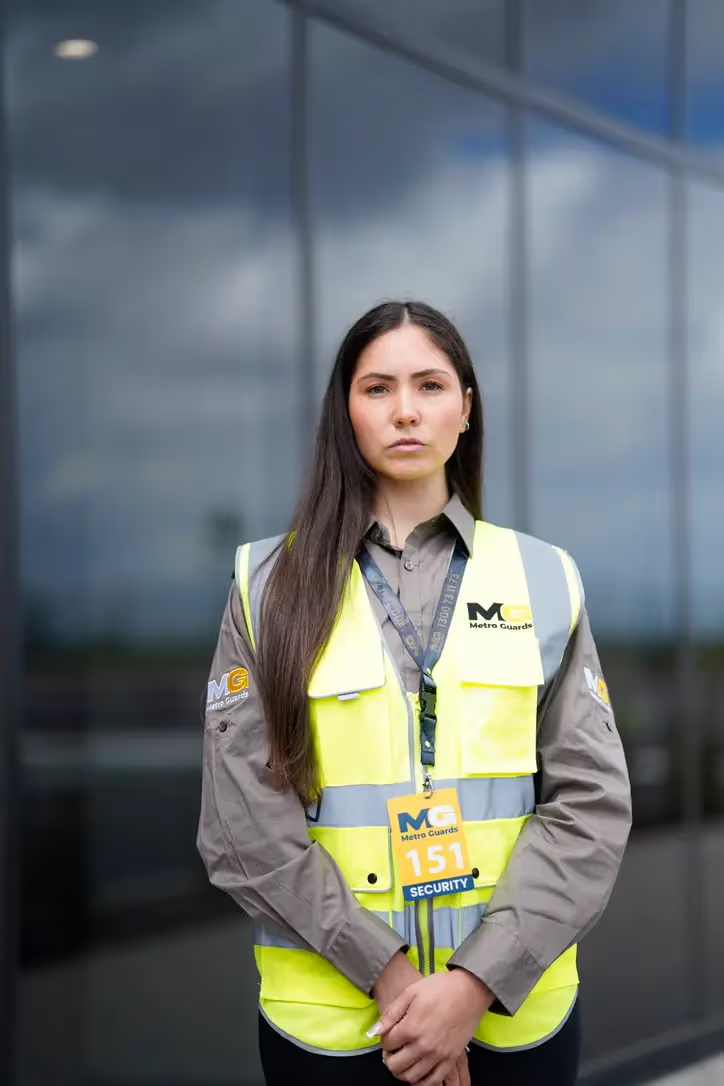
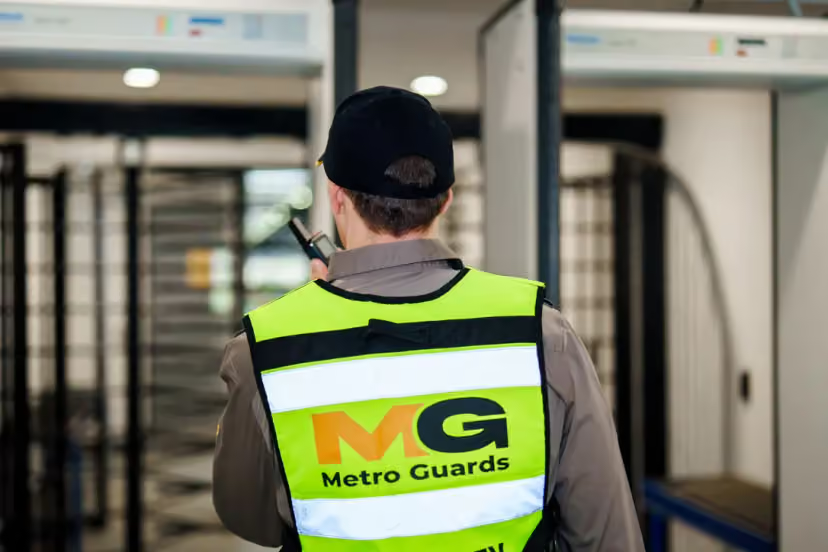
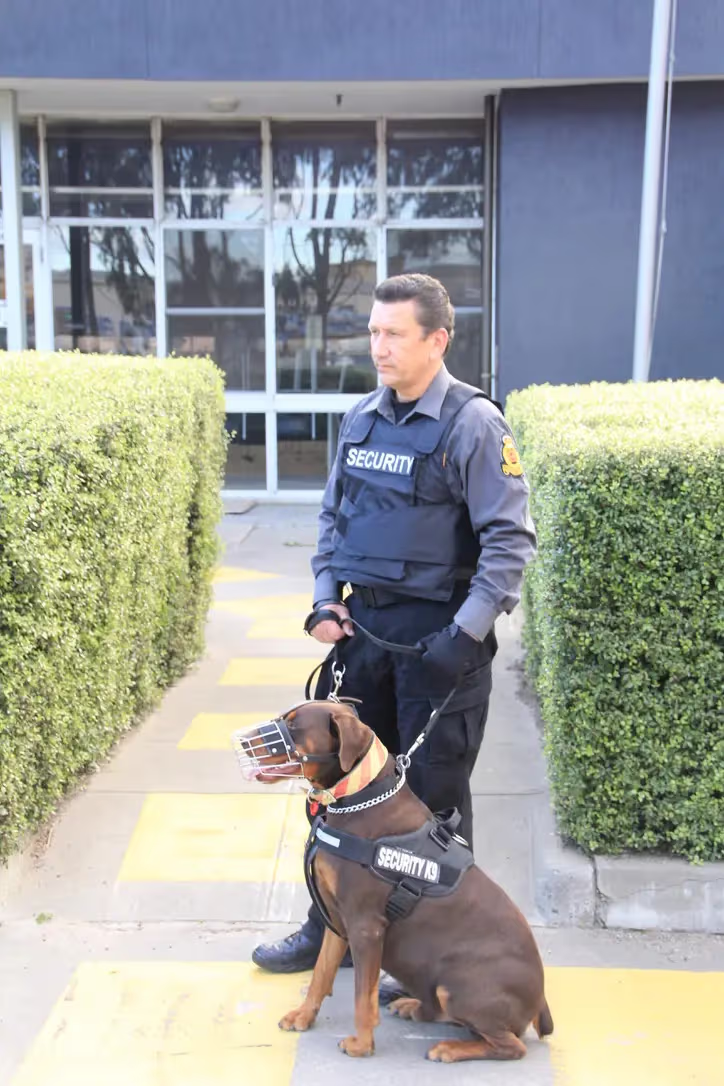
On-site security guards are licensed officers physically present at your property. Whether they're stationed at a front desk, patrolling a construction site, or managing entry at an event, on-site security services provide a level of physical security presence that no camera can replicate.
Officers deliver:
- Visible deterrence, since most offenders avoid a site with a guard already standing on it
- Immediate, hands-on response to intruders, medical incidents or disputes
- Perimeter protection through active patrols rather than passive monitoring
- Judgement calls a camera can't make, like reading body language or defusing a tense situation before it turns physical
On-site officers can also support a business's broader workplace safety and duty-of-care responsibilities by identifying and responding to risks as they develop, rather than only recording them after the fact.
Safe Work Australia names security officers among the occupations at higher-than-average risk of workplace violence, which is exactly why sites with public-facing risk, licensed venues, retail centres, and healthcare sites benefit from trained security guard services rather than cameras alone.
Remote Guarding vs On-Site Guards: Head-to-Head
Factor | Remote Guarding | On-Site Guards |
|---|---|---|
Response type | Detect, verify, warn, escalate | Immediate, physical, in person |
Best coverage | Large, open perimeters, multiple sites | Single site needing constant presence |
Deterrence | Audio warning after detection | Visible presence before anything happens |
Cost driver | Camera and analytics infrastructure plus monitoring fees | Rostered officer hours on site |
Limitation | Can't physically intervene or check credentials | Can't watch every metre of a large perimeter at once |
Works well for | Vacant sites, after-hours car parks, warehouse perimeters | Construction sites, events, retail floors, front-of-house |
Remote Guarding vs On-Site Guards: What Affects Cost?
There's no single answer to what remote guarding costs versus hiring on-site guards. Both scale up or down depending on the site. The main factors that move the price either way are:
- Number of cameras and coverage points needed to remove blind spots
- Monitoring hours, whether that's after-hours only or full 24/7 security monitoring
- Number of guards required and whether the role is static, patrol-based or event-specific
- Site size and layout, since a sprawling yard costs more to cover than a single tenancy
- Patrol frequency, if mobile patrols are backing up either model
- Equipment and infrastructure, including camera hardware, connectivity and SOC integration
- After-hours requirements, since risk (and cost) usually shifts once a site is unoccupied
- Response requirements, since a guaranteed on-site response time costs more than a monitor-and-escalate service
As a rule of thumb, remote guarding tends to carry a larger upfront technology cost with a lower ongoing monitoring fee, while on-site guards carry a predictable hourly cost that scales directly with the hours you roster.
The right comparison isn't remote guarding cost against guard hourly rates in isolation; it's the cost of covering your specific risk properly under each model.
Which Security Option Is Right for Your Property?
Choose remote guarding if:
- Your site is large or spread out
- Most of your risk occurs after hours
- You already have CCTV or camera infrastructure in place
- You need broad perimeter coverage without rostering staff around the clock
Choose on-site guards if:
- You need access control or ID checks at entry points
- Customers or staff may need physical assistance
- There's a realistic risk of confrontation or crowd issues
- You need a visible deterrent during operating hours
Choose both if:
- You need genuine 24/7 coverage
- Your site has multiple risk zones with different exposure levels
- You want technology handling detection while officers handle physical response
When Remote Video Monitoring Makes Sense
Remote video monitoring earns its keep on sites where the risk is mostly after-hours, and the perimeter is too large or too remote for cost-effective foot patrols. Vacant commercial buildings, large car parks, and unmanned yards are good candidates.
Virtual security guards watching multiple camera feeds from a SOC can flag an intrusion and get a warning out over two-way audio before an officer even arrives on scene.
Compared with unmonitored security guard vs CCTV setups, an actively monitored system means someone is actually watching when an alert fires, not reviewing footage after the damage is done.
The trade-off: remote security monitoring through cameras alone still relies on someone being close enough to physically respond once an alert is confirmed. That's where a rostered rapid alarm response team or mobile patrol needs to sit behind the technology, not replace it.
When You Need On-Site Security Guards On the Ground
Some risks can't be managed from a monitoring centre. Construction sites in growing areas like Dandenong face theft of tools and machinery that a warning over a speaker rarely deters. Retail centres in the Melbourne CBD need staff who can manage a shoplifter face to face, not just record the incident.
Events and licensed venues need crowd control services and officers who can physically separate people before a situation escalates.
For sites exposed to theft, unauthorised access or public-facing incidents, having static security guards physically present can provide a response that remote monitoring alone cannot. Cameras record that kind of activity. Officers can act on it while it's happening.
Remote Security vs Physical Security: Why Many Sites Need Both
The remote guarding vs on-site guards question rarely has a single winner because the two models solve different problems. Remote guarding covers the hours and areas where a full-time officer isn't cost-effective. On-site guards cover the moments where physical presence, judgement, and hands-on response actually matter.
That's why our commercial security services are built around blending remote security vs on-site security rather than picking one. Our 24/7 Operations Centre reviews alarm activations and live incident reports from every site we cover, while mobile patrol security and static officers handle the physical response.
According to ASIAL, Australia's private security sector now includes more than 12,700 licensed companies and over 155,000 licensed personnel generating in excess of $11 billion a year, which reflects just how central this blended, technology-plus-officer model has become across the industry.
For a site like a construction yard, that might mean cameras and alarms covering the perimeter overnight with a mobile patrol responding to any verified alert. For a retail centre, it might mean a static officer during trading hours backed by remote monitoring after close. The right mix depends on your site's layout, hours and risk profile, not a one-size-fits-all package.
Get a Site-Specific Security Recommendation
Every site is different, and guessing at the right mix of remote guarding and on-site guards usually costs more than getting it assessed properly. Our team can walk your site, map out where cameras and monitoring cover the risk and where you genuinely need an officer standing there, and put together a plan that doesn't pay for coverage you don't need. Request a quote or call 1300 73 11 73 to book a site assessment.
Frequently Asked Questions
What is remote guarding?
Remote guarding is a security model where cameras and analytics detect activity on a property, and an operator in a security operations center reviews the footage and responds, often with a live audio warning, before escalating to police or an on-site patrol if needed.
What is the difference between remote guarding and CCTV monitoring?
Standard CCTV records footage for later review. Remote guarding adds a staffed SOC that actively watches live video surveillance, verifies genuine incidents in real time, and can intervene immediately through audio warnings or by dispatching a response, rather than just capturing evidence after the fact.
Is remote guarding cheaper than hiring on-site security guards?
It depends on the site. Remote guarding often costs less per hour of coverage on large, open perimeters because one operator can monitor many cameras at once. On-site guards cost more per hour but deliver a physical response that cameras alone can't provide, which can work out cheaper overall if it prevents repeat break-ins or theft.
Can remote guarding replace on-site security guards completely?
Not on sites where physical intervention, access control or crowd management is needed. Remote guarding can detect and warn, but it can't check an ID at a gate, restrain an intruder, or de-escalate a confrontation in person. Most businesses use it to extend coverage, not replace officers entirely.
Is remote guarding suitable for construction sites?
Yes, particularly for perimeter coverage overnight and on weekends when a site is unoccupied. Most construction sites still pair it with on-site or mobile patrol guards for physical checks, theft deterrence and any verified incident that needs a person on the ground during working hours.
Can remote guards contact police directly?
Yes. Once a SOC operator verifies a genuine incident, standard practice is to contact police directly and pass on real-time details from the live feed, which typically supports a faster, better-informed response than an unverified alarm alone.
Does remote guarding work 24/7?
Yes, that's one of its main advantages. A properly staffed SOC provides 24/7 security monitoring across every camera on a site, though the physical response to a verified incident still depends on how quickly a patrol or officer can reach the location.
What does remote guarding cost in Melbourne?
Cost varies with the number of cameras, monitoring hours, site size and response requirements, so there's no single market rate. The most reliable way to get an accurate figure is a site assessment that maps your actual risk areas against the coverage you need.