

In most cases, K9 security is better for large, high-risk sites that need rapid detection and strong deterrence, while traditional guards are essential where access control, customer interaction, or decision-making is required. Many businesses achieve the best protection by combining both.
K9 security vs traditional guarding comes down to speed of detection and the ground each option can cover. A trained security dog and handler pick up an intruder faster than a lone officer and patrol a larger perimeter in the same shift.
Traditional guards still win where a site needs people skills, front-of-house access control, or visitor management. Metro Guards is an ASIAL Gold Member and licensed by the Licensing & Regulation Division (LRD), Victoria Police. We've spent 17 years fitting Melbourne businesses with the right mix of both.
Quick Overview: K9 Security vs. Traditional Guards
Feature | K9 Security | Traditional Guard |
|---|---|---|
Detection speed | Excellent | Moderate |
Deterrence | Very High | High |
Access control | No | Yes |
Visitor management | No | Yes |
Large sites | Excellent | Good |
Construction sites | Excellent | Good |
Cost on large sites | Often lower overall | Higher if multiple guards needed |
Why This Comparison Matters for High-Risk Sites
High-risk site security isn't a one-size question. A CBD office lobby and a vacant industrial yard in Laverton North need completely different coverage.
Construction site security, warehouse and logistics security, and critical infrastructure protection all carry different threat profiles, and the guard-versus-dog decision changes with each one. Getting it wrong means either paying for capability you don't use, or leaving gaps a determined intruder will find.
We run a security risk assessment before recommending anything. That assessment looks at site size, access points, hours of vulnerability and what's actually on-site worth protecting, then matches the findings to either K9 patrol services, static officers, or a combined deployment.
What Traditional Guarding Actually Covers
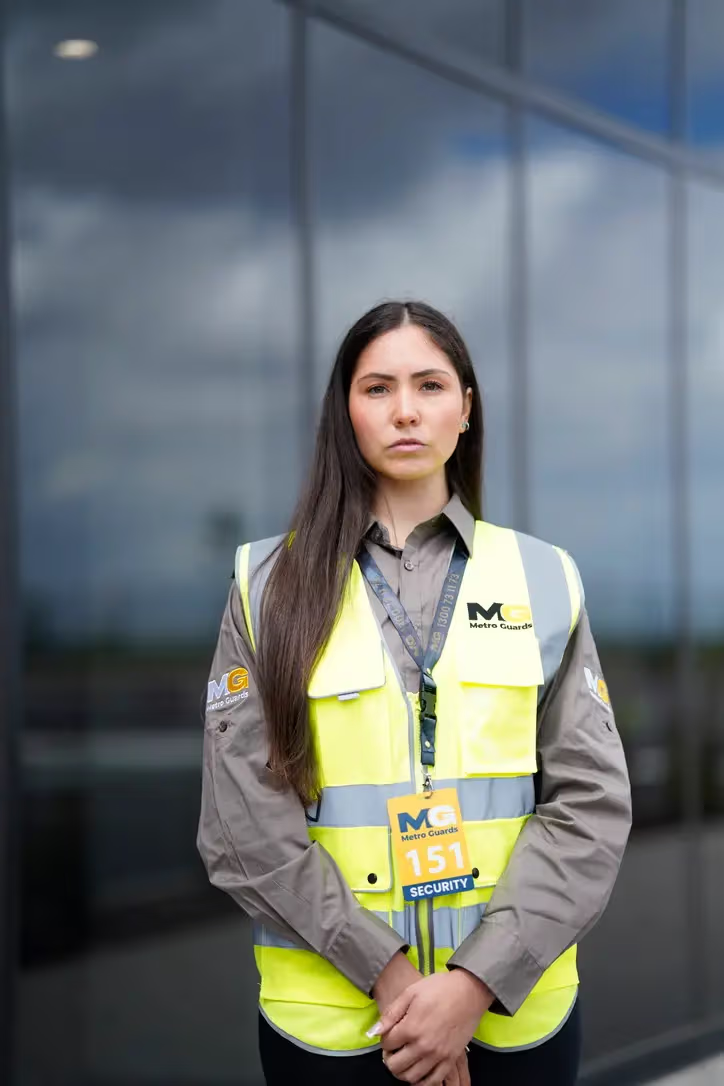
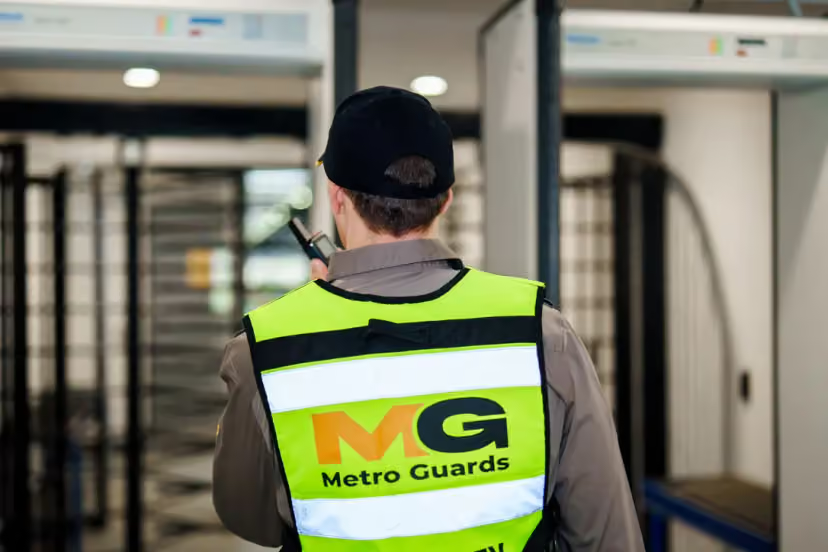
Traditional guarding means a licensed officer stationed or patrolling a site. It's built around presence, judgement and interaction. A guard checks ID at a gatehouse, manages deliveries, operates site access control, and can de-escalate a dispute with a member of the public. None of that is replaceable by a dog.
Officers are also the right call anywhere a site needs someone to think on their feet. Construction sites with subcontractors coming and going all day, retail environments with customers, or corporate lobbies all rely on a person who can hold a conversation and make a judgement call.
Our officers patrol these environments daily across Melbourne, covering everything from static reception duties to mobile perimeter checks.
The limitation is physical. A guard on a 12-hour night shift gets tired. Attention on a bank of CCTV screens drifts after a few hours. On a large site, a single officer simply can't be everywhere, and a determined intruder who's done reconnaissance knows exactly where the blind spots sit.
What K9 Security Adds
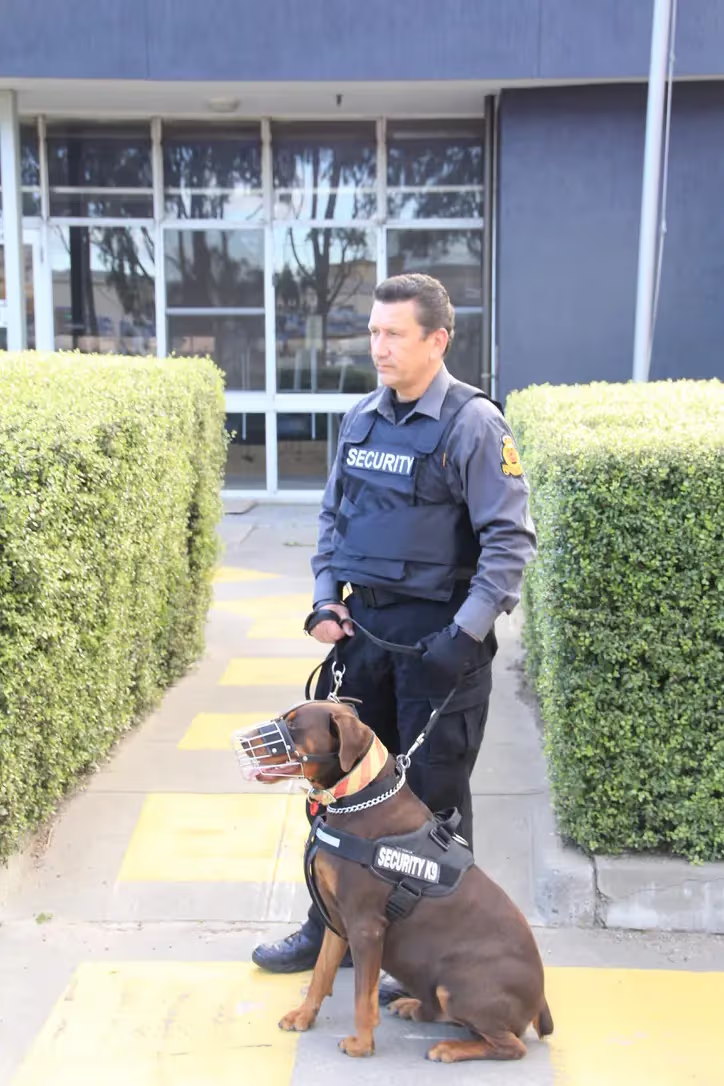
K9 security guards work alongside a handler, not instead of one. The dog's senses do what CCTV and a tired set of human eyes can't: pick up movement, scent or sound from much further away, in the dark, without needing a sightline.
Explosive detection dogs and drug detection dogs are trained for specific contraband, but general-purpose patrol dogs are trained for a broader job: perimeter security, intruder detection and rapid threat detection across a site that's too large for one person to watch.
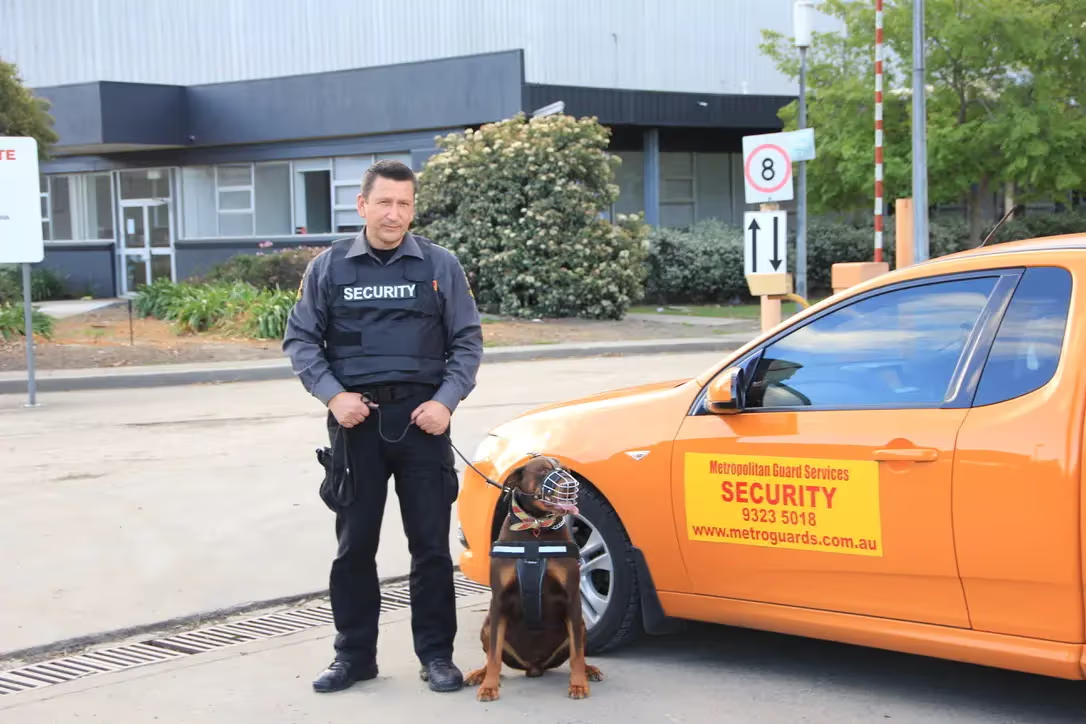
The presence itself does a lot of the work. A visible K9 unit signals a site is a harder target before anyone tries anything. Signage, a marked vehicle, and a dog on lead at the gate change the calculation for anyone casing a property.
That deterrent effect is why K9 security for high-risk sites gets requested most often for vacant buildings, large-format warehouses and construction sites between shifts, when there's no other activity to mask an intruder's approach.
K9 Security vs Security Guards: Head-to-Head
Security dogs vs security guards isn't really an either-or question once you look at what each is built for.
- Detection speed: A dog identifies an intruder by scent or sound well before a guard would notice movement on camera or in person.
- Ground covered: One handler-and-dog team can patrol a perimeter that would otherwise need two or three static officers.
- People-facing tasks: Visitor sign-in, deliveries, and de-escalating a dispute all still need a guard.
- Deterrent value: A visible dog is widely seen as a stronger visual deterrent than a static guard alone, particularly after dark.
- Cost per hour: A K9 patrol typically works out more cost-effective than deploying multiple static officers to cover the same ground, though the comparison depends on site size and hours required.
K9 security vs security guards is rarely a straight swap. Most high-risk sites end up running both: officers for the tasks that need a person, dogs for the ground that needs covering fast.
When Should You Hire K9 Security?
K9 security for high-risk sites earns its cost when a property meets one or more of these conditions: it's vacant or unattended overnight, it covers a large perimeter that's expensive to staff with multiple guards, it's holding valuable plant or materials that have already been targeted, or its layout gives an intruder several ways in that CCTV alone can't watch.
Construction site security is the clearest example. Sites across growth corridors like Dandenong, Derrimut and Tullamarine sit empty overnight with plant, tools and copper wiring on open display.
Crime Statistics Agency Victoria data shows offences at construction-related locations rose from 4,292 in 2024 to 4,583 in 2025, and separate reporting on copper theft shows losses climbing sharply across the same period.
A K9 patrol covers that kind of exposed perimeter far more efficiently than static guards alone, which is why our construction patrol security guards and K9 teams are often booked together on the same site.
Warehouse security is the second common case. Distribution centres around Truganina and Epping hold stock worth protecting and long, low-visibility aisles that suit a dog's senses better than a camera feed. Combine this with our mobile patrol security service for a site that needs both scheduled checks and standing K9 presence.
Can K9 Units Replace Security Guards?
No, and we tell clients this upfront. A dog can't check ID, operate a boom gate, write an incident report a court will accept, or talk down an agitated visitor. K9 units replacing security guards outright only works on sites with no public interaction and no access control requirement, such as a fenced, vacant yard.
Everywhere else, the two roles are complementary rather than interchangeable. Our static security guards and K9 teams are quoted as a combined package specifically because most sites need both functions covered.
Benefits of K9 Security Services
The benefits of K9 security services go beyond faster detection. A trained dog doesn't lose focus the way a person does across a long night shift, and the visual deterrent holds up even when nothing else on-site is monitored in real time.
For asset protection on sites carrying high-value plant or stock, that combination of stamina and presence is difficult to replicate with cameras or alarms alone. Handlers are certified under national K9 deployment standards, so the capability sits alongside, not instead of, our licensed officers.
What Industries Use K9 Security
Dog security services get used wherever a site is large, isolated, or valuable enough to justify it. That includes construction and infrastructure projects, warehouse and logistics security for distribution centres, vacant commercial buildings awaiting lease, and events needing a visible deterrent across a wide public footprint.
Our industrial and logistics and construction and infrastructure clients most commonly request K9 alongside standard patrols, particularly where critical infrastructure protection is part of the brief.
According to ASIAL, Australia's licensed security industry covers more than 155,000 personnel and 12,700 licensed companies nationally, underlining how broad the demand for varied protective security models has become.
Safe Work Australia data also shows construction remains one of the highest-risk industries for on-site incidents, which is part of why access control and after-hours coverage matter as much as they do on active builds.
Cost of K9 Security Services
Cost of K9 security services depends on site size, hours required, and whether handlers are on standing patrol or scheduled checks. As a rough rule, one K9 handler team can cover ground that would otherwise need two to three static officers, which is why K9 patrol services often work out cheaper per hectare covered even though the hourly rate for a handler team sits above a single guard's rate.
We scope this properly during the initial security risk assessment rather than quoting a flat rate, since a small yard and a sprawling logistics site have very different requirements.
Get a K9 or Traditional Guarding Quote
If you're weighing K9 security vs traditional guarding for your site, we can assess it properly rather than guess. Get a quote, and we'll recommend static officers, a K9 patrol, or a combined deployment based on what your site actually needs. You can also book a guard directly if you already know which service fits.
Frequently Asked Questions
Are security dogs better than security guards?
Neither is universally better. Dogs detect intruders faster and cover more ground, but guards handle access control, visitor management, and situations that need judgement. Most high-risk sites use both.
When should you hire K9 security?
Hire K9 security for sites that are vacant overnight, cover a large perimeter, hold valuable plant or stock, or have already experienced break-ins. A security risk assessment will confirm whether it's needed.
Can K9 units replace security guards?
Only on sites with no public interaction and no access control requirement, such as a fenced, vacant yard. Anywhere with visitors, deliveries, or reception duties still needs a guard.
What industries use K9 security?
Construction, warehousing and logistics, vacant commercial property, and large events all use K9 security regularly, mainly for perimeter coverage and deterrence.
How much does K9 security cost compared to traditional guards?
A K9 handler team typically costs more per hour than a single static officer, but covers more ground, so it often works out more cost-effective for large or high-risk sites when compared hour-for-hour against multiple guards.
Do security dogs deter criminals?
Yes. A visible K9 unit, signage and a marked vehicle are a strong visual deterrent, particularly on sites that are otherwise unattended after hours.