

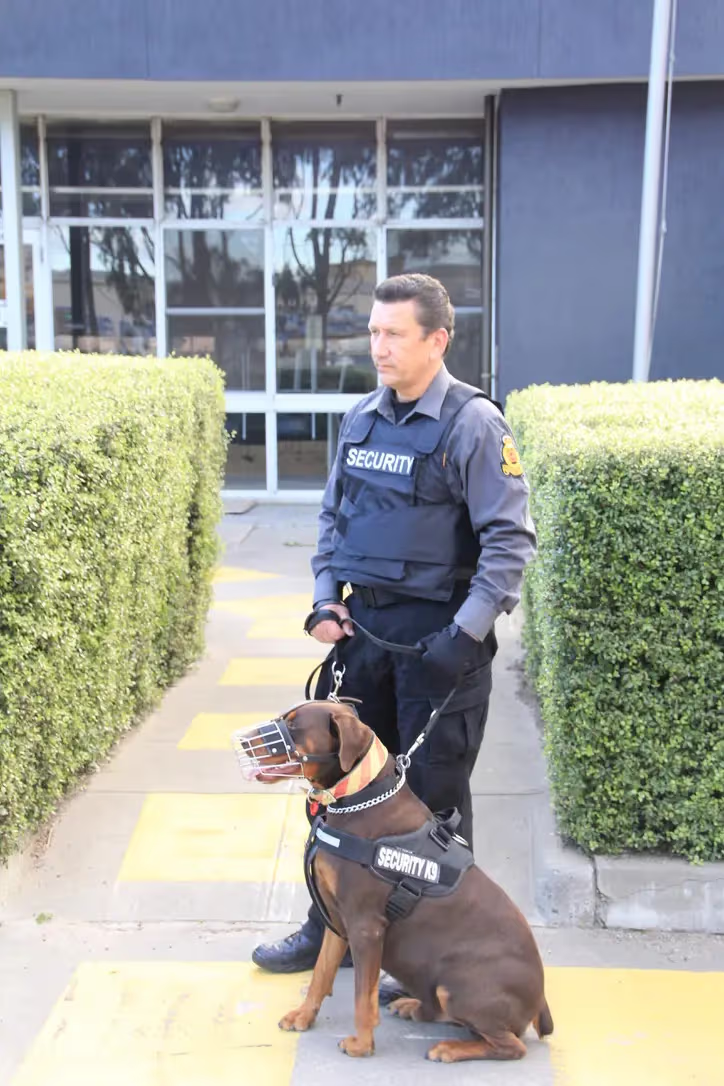
K9 security services pair trained security dogs for property protection with licensed handlers to detect intruders and deter break-ins before they escalate. For warehouses, construction sites, retail premises and event venues across Melbourne, security dog patrols for commercial properties add a detection method that patrols on foot alone don't have.
We run K9 and officer teams across Melbourne, and canine patrols for large premises are one of the more requested services on sites with a lot of ground to cover, from shopping precincts to logistics parks. A trained dog paired with an experienced handler picks up on movement and scent that a person walking the same route would likely miss.
Metro Guards is ISO and CM3 certified, an ASIAL Gold Member, and licensed by the Licensing & Regulation Division (LRD), Victoria Police.
What K9 Security Services Actually Cover
A K9 unit is a handler and dog working as one team, not a dog patrolling on its own. The handler directs the search, reads the dog's response to a scent or sound, and manages any confrontation with an intruder.
A dog's primary advantage is its sense of smell, backed by hearing well beyond human range, which means it can pick up a scent trail or a sound behind a wall, stack of stock, or parked vehicle before a person notices anything.
On a typical shift, the team works the perimeter first, then moves through loading docks, stairwells, plant rooms and anywhere CCTV coverage is patchy. Every check is logged with a time, location, and outcome. Our K9 security guards work this way across construction, retail, industrial and event sites.
Security Dogs for Warehouse Protection After Hours
Warehouses sit empty for long stretches overnight and on weekends, which is when stock theft and break-ins tend to happen. Security dogs for warehouse protection can move through racking aisles and yard perimeters and pick up an intruder tucked behind pallets that a torch beam alone might not catch.
For sites already running a warehouse security program, a K9 patrol sits alongside existing alarm response and CCTV monitoring rather than replacing it, so someone is physically confirming what triggered an alert.
Canine Security for Construction Sites and Vacant Builds
Construction sites lose tools, copper, fuel and machinery to opportunistic theft once the crew has gone home for the day. Canine security for construction sites works as a deterrent because a dog and handler on site is a real, present response rather than footage reviewed the next morning. Handlers also check fencing, hoarding and locked-up compounds as part of the patrol.
WorkSafe Victoria's guidance on construction site security fencing sets out the underlying duty principal contractors already carry to keep unauthorised people off an active site. A K9 patrol is one way of enforcing that perimeter once the site is locked up.
K9 Security for Events and Venues
Large crowds make it harder for officers to track individual behaviour across a whole site. K9 security for events and venues adds a visible presence at entry points and a fast search option if a bag or vehicle needs checking. Dogs work alongside event security and crowd control teams on gate control, back-of-house access and car parks before doors open and once the venue has cleared.
Canine Patrols for Large Premises: Retail and Logistics Parks
Shopping centres, logistics parks and multi-tenant industrial estates often have more ground than a single officer can realistically watch on foot. Canine patrols for large premises let one team work car parks, loading zones and common areas on a set route, with the dog signalling if something along that route is out of place.
It's part of why mobile patrol contracts on multi-building or large-perimeter sites increasingly include a K9 option.
Victoria recorded 630,592 criminal offences in the year to December 2025, up 4.2% on the year before, and retail theft offences rose 6.1% to 41,547 over the same period, according to the Crime Statistics Agency. That trend is part of why more retail and logistics operators are asking about a canine layer rather than relying on cameras and static guards alone.
Handler Qualifications and What the Law Actually Requires
In Victoria, "guard with a dog" is a specific sub-activity endorsed on a security guard licence under the Private Security Act 2004 (Vic); it isn't a separate general licence, and a handler can't use it to cover any other guarding activity such as crowd control.
It's a condition of that endorsement that any dog used for security work is trained to at least the minimum obedience level set out in the Domestic Animals Regulations 2015. A security business applying to offer this activity also has to nominate the person directly responsible for managing it and hold public liability insurance covering that specific activity, not just general security cover.
That's a meaningful bar, and it's worth checking rather than assuming, because "guard with a dog" sits alongside far more common licence categories like crowd control and general security guarding. It's a smaller, more specialised slice of the industry, and not every provider that offers general patrols also holds it.
Choosing a Security Company for K9 Services
A few things worth checking before signing a K9 contract:
- The business holds the "guard with a dog" endorsement specifically, not just a general security firm licence
- The handler can show their own individual licence with that endorsement
- Dogs are trained and periodically reassessed against a documented standard, not a one-off certificate from years ago
- Patrol reports are logged with timestamps, not summarised verbally after the fact
- Public liability insurance covers the K9 activity itself, and you've actually sighted the certificate
Price alone is a poor way to compare providers here, since an unlicensed handler or an untrained dog creates liability rather than protection. Our earlier piece comparing K9 security against traditional guarding on Melbourne sites goes into more detail on detection speed and cost if you're weighing the two.
Request a Melbourne K9 Security Assessment and Quote
If your warehouse, construction site, retail precinct or venue needs a faster response than cameras and static patrols alone can give you, we can assess the site and scope a K9 patrol that fits it.
Metro Guards is owner-operated, ISO and CM3 certified, an ASIAL Gold Member, and licensed by the LRD, Victoria Police. Request a K9 security assessment and quote or contact us to talk through your site.
Frequently Asked Questions
How much does K9 security cost compared to a standard security guard?
K9 teams generally cost more per shift than a single unarmed guard, because you're paying for a licensed handler plus a trained dog. On larger sites, this can offset itself, since one team may cover ground that would otherwise need two or three officers.
Are security dogs dangerous to staff or the public?
A properly trained security dog works under its handler's direction and responds to commands rather than acting on its own. Providers using dogs for detection and controlled deterrence, rather than dogs trained purely for aggression, are the standard to look for.
What breeds are typically used for commercial security patrols?
German Shepherds, Belgian Malinois, and Dobermans are common working breeds in commercial security because of their trainability, stamina, and scenting ability, though the right breed depends on the site and task.
Can security dogs work alongside CCTV and alarm systems?
Yes. K9 patrols are usually layered on top of existing CCTV and alarm monitoring, with the dog and handler responding in person to confirm what triggered an alert rather than replacing the electronic system.
Do security dog handlers need a special licence?
In Victoria, yes. A handler needs a security guard licence with the specific "guard with a dog" endorsement, and any dog used has to meet the minimum obedience standard set out in the Domestic Animals Regulations 2015.
How often are security dogs retrained or reassessed?
Victorian law doesn't set a fixed retraining interval, but the obedience standard is an ongoing licence condition, not a one-off test. Reputable providers reassess dogs and handlers on a regular documented cycle rather than relying on initial certification alone.