

Planning event security services starts with a risk assessment, not a guard count. You map entry points, crowd flow, VIP movement and emergency exits first, then build event entrance screening, crowd control and staffing around what that assessment finds. Get this order right, and the rest of the plan falls into place.
Most Melbourne organisers hire a security guard team too late, after the venue is booked and the run sheet is already set. We're Metro Guards: ISO 9001 and CM3 certified, an ASIAL Gold Member, and licensed by the Licensing & Regulation Division (LRD), Victoria Police. In 17 years building event security services for festivals, concerts and corporate functions across the city, the plans that hold up under pressure are the ones with venue access management and VIP protection for corporate events built in from day one, not bolted on the week before doors open.
Start With a Security Risk Assessment, Not a Guard Headcount
Every event plan should open with a security risk assessment, not a call to book officers. A proper assessment looks at the venue layout, expected crowd size, alcohol service, weather exposure, VIP attendance and the surrounding area, whether that's a laneway venue in the CBD or an open-air site near Sidney Myer Music Bowl.
Safe Work Australia sets out the national framework organisers work within: identify hazards, assess the risk, put controls in place, then review. Event safety management follows the same logic. The assessment decides how many officers you need, where they stand, and what triggers an incident prevention response before a small problem becomes a big one.
Controlling Who Gets In: Venue Access and Entry Screening
Venue access management is where most event security services actually start earning their keep. This covers every point where a person, vehicle, or delivery crosses into your event space: main gates, staff doors, loading docks, and VIP entries.
Event entrance screening typically layers a few checks together:
- Ticket and accreditation checks at the outer perimeter
- Bag checks and screening at the entry point, scaled to the event's risk level
- Security checkpoints for staff, contractors and talent using separate access
- Entry and exit management so crowd flow doesn't bottleneck at a single gate
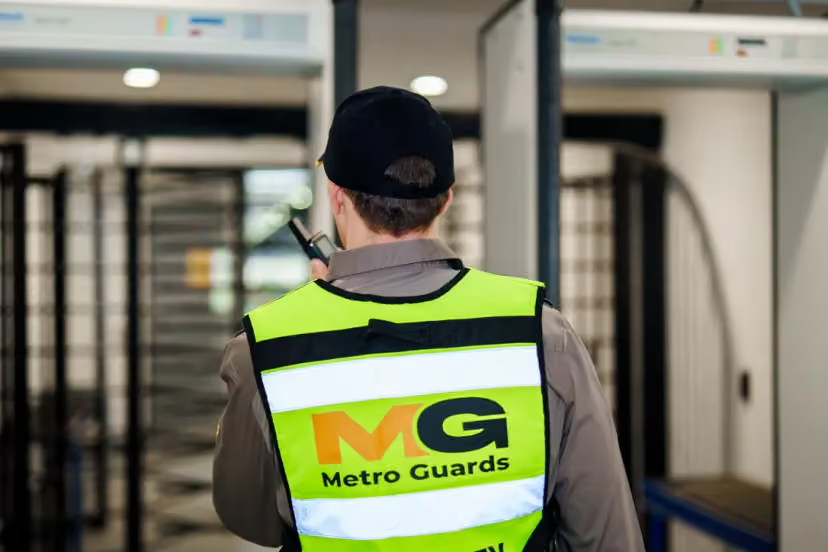
Large Melbourne venues like Marvel Stadium and the Melbourne Cricket Ground run multiple screening lanes for exactly this reason: a single congested entry point creates both a safety risk and a poor first impression. Our event security guards work these access points as a coordinated system, not a row of individual checkpoints, with radio contact back to a central point so guest screening decisions get made all night.
Crowd Control for Concerts, Festivals and Public Events
Crowd control for public events comes down to one question: what happens when density builds faster than people can move? WorkSafe Victoria's guide to crowd control at venues and events points out that normal walking speed drops sharply as crowd density rises, which is exactly why a crowd management plan needs to already be working before the gates open, not being written on the fly once a bottleneck forms.
Festival crowd management adds extra layers: mosh pit monitoring near the stage, welfare checks for dehydration and intoxication, and clear directional signage so streams of people don't collide head-on at pinch points.
Concert security planning works the same problem from the stage outward, covering barrier lines, photographer pits and performer access alongside the general crowd. Our crowd control services build all of this into the site plan before the gates open, with barrier placement and officer positions marked against the actual venue map rather than a generic template.
VIP Protection for Corporate Functions and Executive Events
Protecting a VIP at a corporate event works differently to general crowd control. It's built around discretion first and visible presence second: a close-protection officer moving with an executive through a Southbank function room needs to read the room and manage access without disrupting the event itself.
Licensed security personnel handling VIP protection plan a route in and out of the venue in advance, coordinate with venue security on holding areas, and stay in contact with the wider event security team so a private movement doesn't clash with general crowd flow. Our corporate event security officers run these briefings before every function, covering arrival timing, media presence, and departure routes as a single plan rather than separate moving parts.
Emergency Response Planning: What Happens If Something Goes Wrong
Event emergency response planning covers medical incidents, evacuations, severe weather, power failure, and crowd-related emergencies, and every scenario needs a named person responsible for the call. Emergency evacuation procedures should be walked through with venue staff and security before the event, not read off a laminated card for the first time during an actual incident.
Licensing has tightened around this in Victoria. Following amendments to the Private Security Act 2004, Victoria Police's Licensing and Regulation Division now requires crowd controllers, bodyguards and security guards to complete approved first aid training before renewing their licence, on top of standard security training. Public safety coordination on the night means our officers know their role in an evacuation, know who calls emergency services, and know the rally points before the first guest arrives.
How Many Security Officers Does Your Event Need
Event security staffing isn't a fixed ratio you can look up once and reuse for every job. Venue layout, alcohol service, VIP numbers, weather, and the event's risk profile all shift the number of officers and where they're placed.
| Event Factor | Effect on Staffing |
|---|---|
| Alcohol service | Increases need for security patrols and welfare checks |
| Multiple entry points | Requires more security checkpoints and screening staff |
| VIP or media attendance | Adds dedicated licensed security personnel for protection duties |
| Outdoor or open-air site | Increases perimeter and venue security coverage |
| High-density crowd areas | Raises crowd control staffing near stages and exits |
We scope event security guards against the risk assessment first, then confirm numbers with the client once the run sheet, guest list, and venue layout are locked in.
Get an Event Security Assessment
Not sure yet how many officers your event needs or what it's likely to cost? Rather than guess, request an event security assessment, and we'll work through the venue, guest numbers, and risk factors with you before you commit to a number. Request a quote, and we'll come back with a staffing plan, not just a price.
How Much Does Event Security Cost in Melbourne?
Event security pricing in Melbourne is quoted per officer, per hour, and varies with the type of guard, the day and time, and how much risk the event carries. Across the Melbourne market, hourly rates for licensed event security guards typically sit somewhere between $45 and $95 per officer, with static or low-risk roles at the lower end and crowd control, VIP protection, or public-holiday shifts pushing toward the top of that range.
A few factors move the price more than others:
- Guard type and licensing: A static entry guard costs less than a licensed crowd controller or a close-protection officer
- Shift timing: Evenings, overnight, weekends and public holidays attract higher rates under the Security Services Industry Award
- Alcohol service: Licensed venues and events serving alcohol generally require crowd control endorsements, which sit higher on the rate card.
- Event size and duration: A two-hour corporate function needs far less coverage than a multi-day festival
Because of how much these factors move the total, we don't publish a single flat rate for event security services. The fastest way to get an accurate number is to send us your venue, date, guest count, and run sheet, and we'll price the job properly rather than quoting a rough per-hour figure that may not hold up on the day.
Get a Quote for Your Event Security Services
If you're planning an event in Melbourne, from a corporate function to a full-scale festival, get in touch before you lock in your venue and date. We'll run through the risk assessment with you and put together a staffing and access plan that fits the event, not a generic package. Get a quote from Metro Guards or book a guard directly for your next event.
Frequently Asked Questions
How far in advance should I book event security services in Melbourne?
Book six to eight weeks out for a standard function, and three to six months out for a festival, concert or large public event. This gives enough time to complete a proper risk assessment, confirm licensed security personnel, and coordinate access and crowd control plans with the venue.
How many security guards do I need for my event?
There's no single ratio that applies to every event. Guest numbers, alcohol service, VIP attendance, and venue layout all change the staffing plan, which is why a risk assessment should come before a headcount is confirmed.
What is included in an event security risk assessment?
A risk assessment reviews the venue layout, crowd size and profile, alcohol service, weather exposure, VIP or media attendance, and the surrounding area. It sets the staffing numbers, access control points and emergency response plan for the event.
Do event security staff need to be licensed in Victoria?
Yes. Anyone performing crowd control, bodyguard, or security guard duties in Victoria must hold a private security licence issued by the Licensing and Regulation Division, Victoria Police, and complete the required training for that activity.
How much does an event security guard cost in Melbourne?
Hourly rates for licensed event security guards in Melbourne generally fall between $45 and $95 per officer, depending on the guard type, shift timing, and risk level. Total cost depends on how many officers the event needs and for how long, which is why a quote based on your actual event details is more accurate than a flat per-hour figure.
What's the difference between crowd control and general event security?
Crowd control focuses specifically on managing the movement, density, and behaviour of a crowd, often under a separate licence category. General event security covers the broader plan: access control, VIP protection, patrols and emergency response across the whole event.
Can event security guards handle both access control and crowd control on the same job?
Yes, provided they hold the licence endorsements for each activity. Many Melbourne events run a mixed team where officers move between entry screening and crowd control duties depending on where the risk assessment identifies the greatest need.