

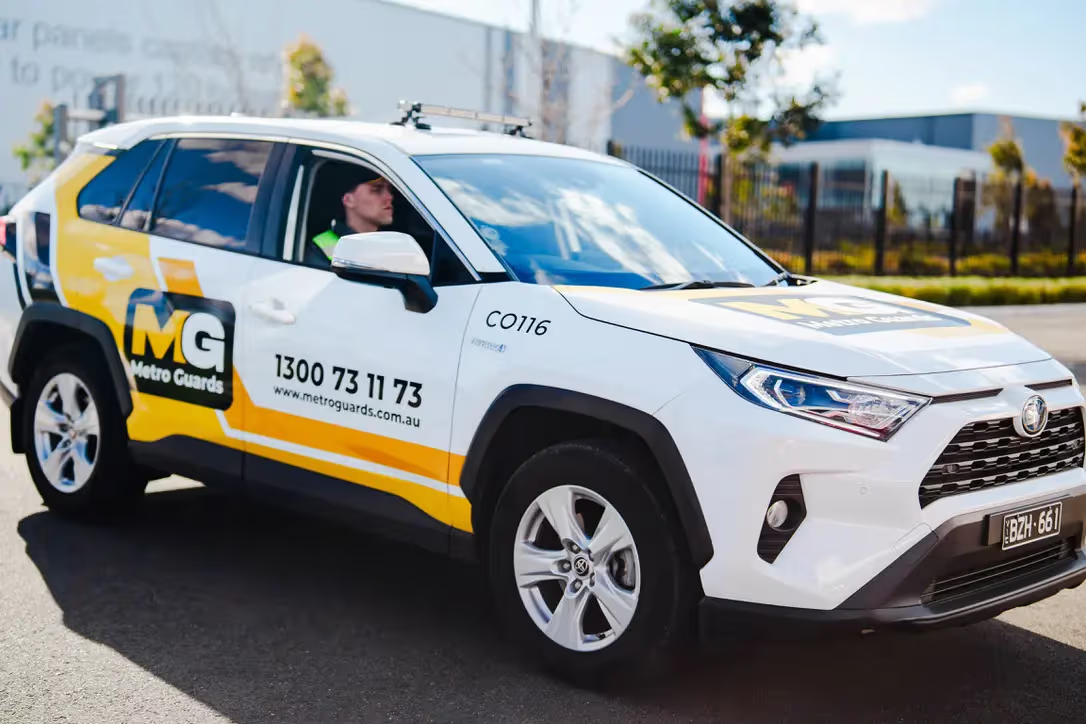
GPS tracking for mobile patrols works by fitting patrol vehicles and officer devices with location transmitters that report position, speed, and checkpoint scans back to a control centre in real time. This gives site managers a live map of every patrol, a timestamped record of every checkpoint, and instant alerts if a route is missed.
Metro Guards has run GPS-tracked mobile patrols across Melbourne for 17 years, and every patrol we operate is logged against our ISO 9001, CM3, and ASIAL Gold Member standards, with officers licensed by the Licensing & Regulation Division (LRD), Victoria Police. We built our patrol technology to close the gap between "a guard drove past" and proof of it.
What GPS-Tracked Security Patrols Actually Record
A GPS-tracked patrol isn't just a dot moving across a map. Every vehicle and handheld device logs several data points on every visit:
- Location and route: The exact path the vehicle or officer took across the site
- Time on site: Arrival, departure, and total dwell time at each checkpoint
- Checkpoint scans: NFC or QR confirmation that provides stronger proof the officer physically reached that checkpoint, rather than simply passing nearby
- Speed and stop data: Confirms a genuine walk-through rather than a drive-by
- Photo and incident logs: Attached to the exact GPS coordinate and timestamp where they were taken
This is the difference between a patrol log you have to take on trust and one you can audit. If a break-in happens at 2 am, we can show precisely when an officer was last at that gate, what they checked, and what they found.
Why Real-Time Patrol Tracking Melbourne Businesses Need It
After-hours crime doesn't happen at random. Empty warehouses, construction sites, vacant retail units, and unattended industrial yards get targeted precisely because no one is watching, which is the pattern mobile patrol security in Melbourne exists to break.
For Melbourne businesses managing vacant, industrial, retail, or construction sites, this makes verifiable after-hours patrols particularly valuable. Property and deception offences remain one of Victoria's largest recorded crime categories year on year, according to Crime Statistics Agency Victoria, which is part of why theft-prone commercial and industrial sites stay a consistent target for after-hours crime.
That's why static reporting isn't good enough anymore. Site managers want to see, not just be told, that a patrol happened.
Real-time tracking solves three problems at once:
- Verification: You get proof a checkpoint was reached, with a timestamp and GPS coordinate attached
- Speed: Dispatch sees the nearest available patrol vehicle on the map and can redirect it to an alarm activation immediately
- Accountability: Supervisors can audit patrol routes against the schedule and flag gaps before a client asks
How the Technology Works, Step by Step
- The vehicle or handheld device transmits position data. GPS units in patrol vehicles and officer devices send location updates at short intervals to our operations centre.
- Geofences define the site boundary. A digital perimeter is set around the property. If a patrol vehicle leaves that zone during an active shift, the system flags it automatically.
- Checkpoints require physical confirmation. NFC tags or QR codes are placed at key points around the site: gates, fire exits, loading docks, plant rooms. An officer has to be standing at the tag to scan it, which gives stronger proof they physically reached that point rather than simply driving or walking nearby.
- Missed checkpoints trigger an alert. If a scheduled scan doesn't occur within the expected window, a supervisor is notified and can redirect the officer or investigate the gap.
- Data feeds a live client portal. Site managers can log in and see patrol history, current vehicle location, checkpoint compliance, and any incident reports, all timestamped and photo-verified.
GPS-Tracked Patrols vs Traditional Patrol Logs
The shift from paper logbooks to GPS-tracked patrols is really a shift from taking a patrol on trust to being able to check it:
Traditional patrol log | GPS-tracked patrol |
|---|---|
Relies on handwritten or manually entered records | Location and checkpoint data logged automatically |
Limited proof an officer actually attended | GPS movement plus checkpoint scan verification |
Hard to audit after the fact | Searchable digital history for every shift |
A missed check may only surface days later | Missed-checkpoint alerts flag gaps in real time |
Client has to ask for an update | Live portal gives clients visibility on demand |
What to Look for in a GPS Patrol Tracking System
Not all "GPS-tracked" patrols offer the same level of verification. When comparing mobile patrol security in Melbourne, it's worth checking a provider actually delivers:
- Real-time location tracking, not a summary emailed the next morning
- Geofencing, so the system flags a vehicle that leaves the site boundary
- NFC or QR checkpoints, not just a GPS ping from somewhere nearby
- Missed-checkpoint alerts that reach a supervisor immediately, not at shift end
- Photo and incident logging tied to the exact location and time
- Digital patrol reports you can search and export, not a paper diary
- A live client portal rather than having to call for an update
- Alarm dispatch integration, so the nearest patrol is sent automatically
- Historical route data you can review weeks or months later if needed
What This Means for Alarm Response
GPS tracking doesn't just prove where a patrol has been; it also speeds up where one goes next. When an alarm activates, our control room can see which vehicle is closest and dispatch it directly rather than working through a roster. That's the same technology behind our alarm response security: faster attendance because the system already knows who's nearest, not because someone happens to be free.
Compliance and Officer Safety
GPS tracking also supports two obligations that sit underneath every patrol contract in Victoria. Every officer we deploy is licensed under the Private Security Act 2004 (Vic), and patrol movement data helps demonstrate that licensed officers actually attended the sites and times specified in a contract.
It also matters for officer safety. Safe Work Australia recognises that people working alone or in isolated settings face higher safety risks, partly because there's no one nearby to notice if something goes wrong.
A mobile patrol officer checking an empty industrial site at 3 am is exactly that kind of lone worker. Live GPS tracking means our control centre always knows an officer's last confirmed location, so if a check-in is missed, someone is already looking into why.
GPS Tracking Across Different Site Types
Not every property needs the same patrol pattern, but the tracking principle is the same everywhere we work:
Site type | What GPS tracking confirms |
|---|---|
Construction sites | Perimeter checks, plant and material security overnight, compliance logs for site managers |
Retail and shopping strips | Loading dock and rear access checks, response to triggered alarms after closing |
Industrial and logistics sites | Wide-area coverage across large yards, dock doors, and fence lines |
Body corporate and strata | Scheduled walk-throughs of common areas, car parks, and fire egress points |
Our construction patrol security teams rely on this most heavily, since large sites with multiple entry points are where a drive-by patrol is easiest to fake and hardest to disprove without GPS data.
The Industry Is Moving the Same Direction
We're not alone in this. ASIAL, the peak body representing the Australian security industry, has flagged rapid response capability and technology-backed verification as central to where the sector is heading, alongside growing demand for integrated, accountable patrol and guarding services. Clients increasingly ask for proof, not promises, and that's shaping how mobile patrol providers across Melbourne CBD and the suburbs operate.
Get GPS-Tracked Mobile Patrols for Your Site
We've run GPS-tracked mobile patrols across Melbourne for 17 years, and every patrol is logged, timestamped, and available in your client portal the same night. If you want a site walk-through and a proposal for patrol frequency, get a quote or contact our team to talk through your site.
Frequently Asked Questions
How does GPS tracking work for security patrols?
GPS units in patrol vehicles and handheld devices transmit location data at regular intervals. Combined with NFC or QR checkpoint scans, this creates a verified, timestamped record of exactly where an officer went and when.
Can GPS patrol data be used as evidence?
Yes, in a supporting role. Timestamped GPS logs, checkpoint scans, and photographs can provide useful supporting documentation for insurance claims and incident investigations, since they show what was checked and when. Whether they're accepted as formal evidence depends on the specific claim, investigation, or legal process involved.
How often do mobile patrols check a site?
This depends on the contract. Some sites need a single scheduled patrol per night; others need hourly or randomised checks. GPS data lets providers confirm the agreed frequency was actually delivered.
What happens if a patrol misses a checkpoint?
A missed scan within the expected time window triggers an alert to the supervisor, who can redirect the officer to the site or investigate the gap immediately rather than finding out after the fact.
Is GPS patrol tracking required by law in Victoria?
There's no specific law mandating GPS tracking itself, but officers must be licensed under the Private Security Act 2004 (Vic), and clients increasingly require verifiable patrol records as part of their service agreements.
Does GPS tracking improve alarm response times?
Yes. Knowing the real-time location of every patrol vehicle allows a control room to dispatch the nearest available unit to an activated alarm, rather than relying on a fixed roster or guesswork.